For some, 'progress' or 'development' in this region means harnessing the hydropower of Nepal, drilling tubewells in the plains, building bigger and better cities. Others see this line of development as unsustainable for environmental reasons. This book argues that the linkages between human activity and natural processes cannot be unambiguously determined by physical sciences; they vary according to individual perceptions and viewpoints.
The book is not a definitive account of water and its role in developmental and environmental issues in this vast and diverse area; such an account would be impossible. Instead, it illustrates the approaches that different experts, from both the physical sciences and the social sciences, take to understanding how society and water interact. A reader who consults all the chapters will come away with a much enhanced understanding of the complexity of human dependence on what is, together with air, the most basic of life-sustaining elements.
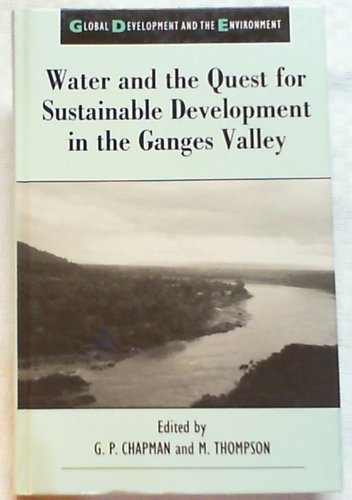
Water and the Quest for Sustainable Development in the Ganges Valley (Global Development and the Environment)
📄 Viewing lite version
Full site ›
Book Details
PublisherThomson Learning
ISBN / ASIN0720121914
ISBN-139780720121919
Sales Rank17,229,510
CategoryPolitical Science
MarketplaceUnited States 🇺🇸
Description ▲
More Books in Political Science
The Millennium Development Goals and Beyond: Internati…
View
Transnational Networks in Regional Integration: Govern…
View
Forensic Psychophysiology Using the Polygraph: Scienti…
View
Gender, Islam and Democracy in Indonesia (ASAA Women i…
View
E-Governance: A Change Management Tool
View
Shop Floor Bargaining and the State: Historical and Co…
View
Red State Uprising: How to Take Back America
View
A Community Health Approach to the Assessment of Infan…
View
Foreign Aid and Landmine Clearance: Governance, Politi…
View