Search Books
Testing During Concrete Con…

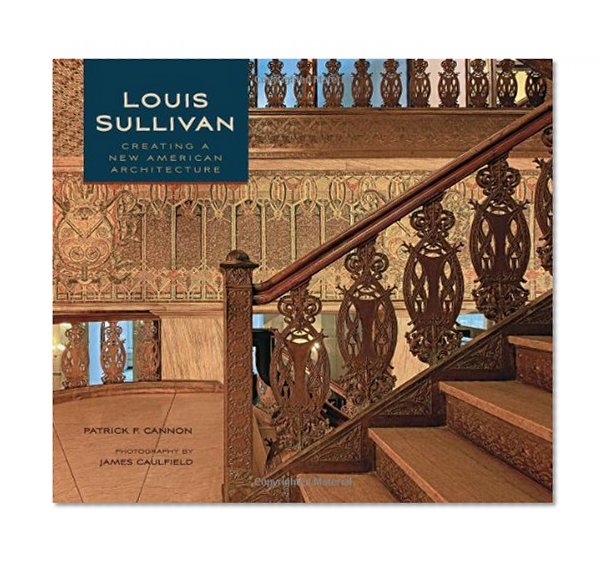
Louis Sullivan: Creating a New American Architecture

Author Patrick F. Cannon
Publisher Pomegranate
Category Architecture
📄 Viewing lite version Full site ›
🌎 Shop on Amazon — choose country
93.41 USD
🛒 Buy New on Amazon 🇺🇸

✓ Only 1 left in stock - order soon.

Share:
Book Details
PublisherPomegranate
ISBN / ASIN0764957716
ISBN-139780764957710
AvailabilityOnly 1 left in stock - order soon.
Sales Rank2,925
CategoryArchitecture
MarketplaceUnited States 🇺🇸

Description

On the eve of the twentieth century, Chicago was rapidly outgrowing its borders. Architect Louis Henry Sullivan (American, 1856-1924) answered the demand for more office space, theaters, department stores, and financial centers by pioneering what would become an essential model for city life—the skyscraper. Blending Art Nouveau complexity with geometric elegance, Sullivan's tall buildings included Chicago's Auditorium Building, the largest building in the world when it was completed in 1889. Sullivan's design was heralded as the Wonder of the Age—a title equally fitting for the architect himself.

Louis Sullivan's designs stand today as leading exemplars of Chicago School architecture. Even Frank Lloyd Wright, a former assistant to Sullivan, would later refer to him as his “lieber Meister,” or “beloved master.” Sullivan brought to his practice a conviction that ornamentation should arise naturally from a building's overall design, restating, in a large or small way, themes expressed in the structure as a whole. Having spent much of his career in a late Victorian world that bristled with busy, fussy ornament for ornament's sake, Sullivan refuted the fashionable style with the now famous dictum “Form follows function.” This break from tradition is perhaps most evident in Sullivan's strides to reimagine the commercial space—from America's earliest skyscrapers to the small-town banks that populated the architect's commissions in the second half of his career.

In Louis Sullivan: Creating a New American Architecture, nearly two hundred photographs with descriptive captions document Sullivan's genius for modern design. Patrick Cannon introduces each chapter with key biographical information and discusses the influences that shaped Sullivan's illustrious career. Rare historical photographs chronicle those buildings that, sadly, have since been destroyed, while James Caulfield's contemporary photography captures Sullivan's existing Chicago buildings and many other structures in eastern and midwestern cities that are of equal importance in the architect's oeuvre.

Dynamics of Pavement Structures
View
Compact City Series: Achieving Sustainable Urban Form
View
Invisible Acts of Power: Channeling Grace in Your Ever…
View
Movements in Green: Conceptual Landscape Gardening
View
Building After Auschwitz: Jewish Architecture and the …
View
The Four Elements of Architecture and Other Writings (…
View
Some Assembly Required
View
The Architecture of O'Neil Ford: Celebrating Place
View
Art/Women/California, 1950-2000: Parallels and Interse…
View