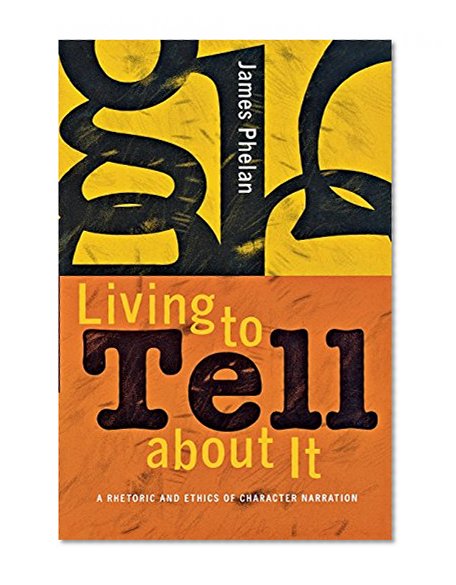
In Living to Tell about It, James Phelan takes up the challenges offered by diverse narratives including Kathryn Harrison's The Kiss, Ernest Hemingway's "Now I Lay Me," Kazuo Ishiguro's Remains of the Day, Frank McCourt's Angela's Ashes, Vladimir Nabokov's Lolita, and John Edgar Wideman's "Doc's Story." Phelan's compelling readings cover important theoretical ground by introducing a valuable distinction between disclosure functions (communications from the implied author to the authorial audience) and narrator functions (communications from the character narrator to the narratee). Phelan also identifies significant types of character narration (also known as first-person narration), including restricted, suppressed, and mask narrations. In addition, Phelan proposes new understandings of such ingrained concepts of narrative theory as unreliable narration, the implied author, focalization, and lyric narrative.
Utilizing what Phelan and Peter J. Rabinowitz have called "theory practice," a critical method that aims to combine theory and interpretation in mutually illuminating ways, Living to Tell about It also makes a major contribution to ethical theory and criticism. Phelan develops the concept of "ethical position" and explores the interactions among the ethical positions of characters, narrators, authors, and audiences. This approach emphasizes not only the close connections between narrative technique and ethics but also the important interactions between the ethical positions of the authorial audience and the flesh-and-blood reader.