In a forty-year career as an oil and gas investment analyst and as an investment banker and strategic adviser on petroleum-sector mergers, acquisitions, and financings, Thomas A. Petrie has witnessed dramatic changes in the business. In Following Oil, he shares useful lessons he has learned about domestic and global trends in population and economic growth, a maturing resource base, variable national energy policies, and dynamic changes in geopolitical forces and how these variables affect energy markets. More important, he applies those lessons to charting a course of energy development for the nation as the twenty-first century unfolds.
By the 1970s, when Petrie began analyzing publicly traded securities in the energy sector, the petroleum investment market was depressed. The rise of the Organization of Petroleum Exporting Countries (OPEC) pushed energy to the center of the national security calculus of the United States and its allies. Price volatility would continue to whipsaw global markets for decades, while for consumers, cheap gasoline prices soon became a fond memory. Eventually, as Petrie puts it, finding oil on Wall Street became cheaper than drilling for it.
Petrie uses this dramatic period in oil business history to relate what he has learned from following oil as a securities analyst and investment banker. But the title also refers to energy sources that could become available following eventual shrinkage of conventional-oil supplies. Addressing the current need for greener, more sustainable energy sources, Petrie points to recent large domestic gas discoveries and the use of new technologies such as horizontal drilling to unlock unconventional hydrocarbons. With these new sources, the United States can increase production and ensure itself enough oil and gas to sustain economic growth during the next several decades. Petrie urges the pursuit of cleaner fossil fuel development in order to buy the time to develop the technical advances needed to bridge the nation to a greener energy future, when wind, solar, and other technologies advance sufficiently to play a larger role.
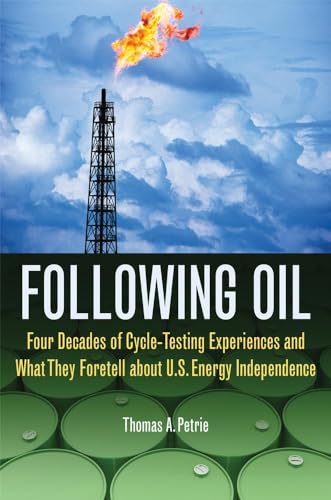
Following Oil: Four Decades of Cycle-Testing Experiences and What They Foretell about U.S. Energy Independence
📄 Viewing lite version
Full site ›
Book Details
Author(s)Petrie, Thomas A.
PublisherUniversity of Oklahoma Press
ISBN / ASIN0806144203
ISBN-139780806144207
AvailabilityIn Stock.
Sales Rank1,159,446
CategoryBusiness & Economics
MarketplaceUnited States 🇺🇸
Description ▲
More Books in Business & Economics
Business Cycles and Forecasting
View
Development Economics: Its Position in the Present Sta…
View
Cost Systems Design
View
So You Want to Dance on Broadway
View
The Blueprint: Reviving Innovation, Rediscovering Risk…
View
Managing IT Outsourcing, Second Edition
View
Education and the Creation of Capital in the Early Ame…
View
Global Corruption Report 2005: Special Focus: Corrupti…
View
More Tales for Trainers: Using Stories and Metaphors t…
View