Perez examines historical accounts of the destruction of the battleship Maine, the representation of public opinion as a precipitant of war, and the treatment of the military campaign in Cuba. Equally important, he shows how historical narratives have helped sustain notions of America's national purpose and policy, many of which were first articulated in 1898. Cuba insinuated itself into one of the most important chapters of U.S. history, and what happened on the island in the final decade of the nineteenth century--and the way in which what happened was subsequently represented--has had far-reaching implications, many of which continue to resonate today.
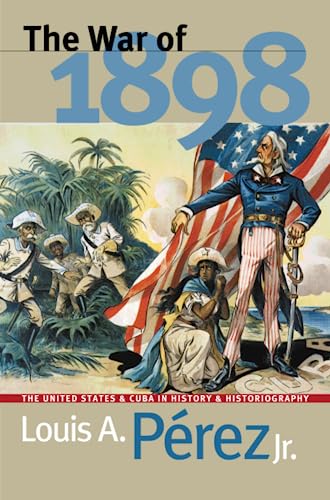
The War of 1898: The United States and Cuba in History and Historiography
📄 Viewing lite version
Full site ›
Book Details
Author(s)Perez, Louis A. Jr.
PublisherUniversity of North Carolina Press
ISBN / ASIN0807847429
ISBN-139780807847428
AvailabilityIn Stock
Sales Rank235
CategoryHistory
MarketplaceUnited States 🇺🇸
Description ▲
A century after the Cuban war for independence was fought, Louis Perez examines the meaning of the war of 1898 as represented in one hundred years of American historical writing. Offering both a critique of the conventional historiography and an alternate history of the war informed by Cuban sources, Perez explores the assumptions that have shaped our understanding of the "Spanish-American War--a construct, he argues, that denies the Cubans' participation in their own struggle for liberation from Spanish rule.
More Books in History
The Bet, and Other Stories
View
Pakistan and the Bomb: Public Opinion and Nuclear Opti…
View
Writing National Histories: Western Europe Since 1800
View
Empire in Eclipse
View
Monks and Laymen in Byzantium, 843-1118
View
The Wilmington and Western Railroad (Images of Rail: D…
View
Black Sailor, White Navy: Racial Unrest in the Fleet d…
View
Feasibility of Laser Power Transmission to a High-Alti…
View
The Democratic Republic: 1801-1815
View