Historians have assumed that after emancipation in Puerto Rico, as in other parts of the Caribbean and the U.S. South, former slaves acquired some land of their own and became subsistence farmers. Figueroa finds that in Puerto Rico, however, this was not an option because both capital and land available for sale to the Afro-Puerto Rican population were scarce. Paying particular attention to class, gender, and race, his account of how these libertos joined the labor market profoundly revises our understanding of the emancipation process and the evolution of the working class in Puerto Rico.
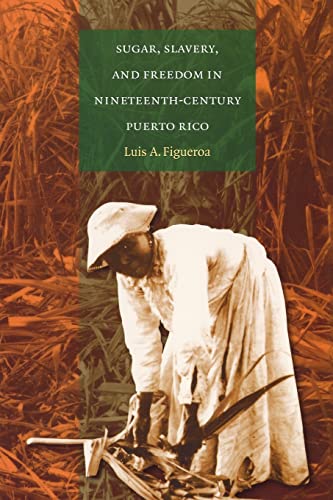
Sugar, Slavery, and Freedom in Nineteenth-Century Puerto Rico
📄 Viewing lite version
Full site ›
Book Details
Author(s)Luis A. Figueroa
ISBN / ASIN080785610X
ISBN-139780807856109
AvailabilityUsually ships in 24 hours
Sales Rank1,357,591
CategoryHistory
MarketplaceUnited States 🇺🇸
Description ▲
The contributions of the black population to the history and economic development of Puerto Rico have long been distorted and underplayed, Luis A. Figueroa contends. Focusing on the southeastern coastal region of Guayama, one of Puerto Rico's three leading centers of sugarcane agriculture, Figueroa examines the transition from slavery and slave labor to freedom and free labor after the 1873 abolition of slavery in colonial Puerto Rico. He corrects misconceptions about how ex-slaves went about building their lives and livelihoods after emancipation and debunks standing myths about race relations in Puerto Rico.
More Books in History
The Bet, and Other Stories
View
Pakistan and the Bomb: Public Opinion and Nuclear Opti…
View
Writing National Histories: Western Europe Since 1800
View
Empire in Eclipse
View
Monks and Laymen in Byzantium, 843-1118
View
The Wilmington and Western Railroad (Images of Rail: D…
View
Black Sailor, White Navy: Racial Unrest in the Fleet d…
View
Feasibility of Laser Power Transmission to a High-Alti…
View
The Democratic Republic: 1801-1815
View