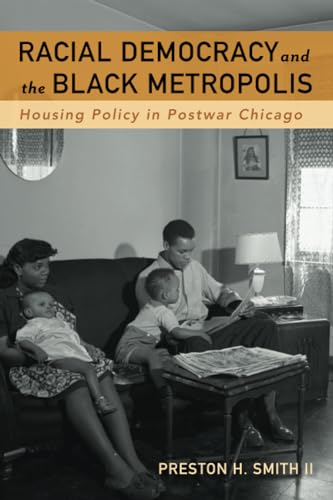
“The African American community.” “The black position.” In accounts of black politics after the Second World War, these phrases reflect how the African American perspective generally appeared consistent, coherent, and unified. In Racial Democracy and the Black Metropolis, Preston H. Smith II examines housing debates in Chicago that go beyond black and white politics, and he shows how class and factional conflicts among African Americans actually helped to reproduce stunning segregation along economic lines.
Class and factional conflicts were normal in the rough-and-tumble world of land use politics. They are, however, often not visible in accounts of the postwar fight against segregation. Smith outlines the ideological framework that black civic leaders in Chicago used to formulate housing policy, both within and outside the black community, to reveal a surprising picture of leaders who singled out racial segregation as the source of African Americans’ inadequate housing rather than attacking class inequalities. What are generally presented as black positions on housing policy in Chicago, Smith makes clear, belonged to the black elite and did not necessarily reflect black working-class participation or interests.
This book details how black civic leaders fought racial discrimination in ways that promoted—or at least did not sacrifice—their class interests in housing and real estate struggles. And, as Smith demonstrates, their accommodation of the real estate practices and government policy of the time has had a lasting effect: it contributed to a legacy of class segregation in the housing market in Chicago and major metropolitan areas across the country that is still felt today.