Lan demonstrates how economic disparities, immigration policies, race, ethnicity, and gender intersect in the relationship between the migrant workers and their Taiwanese employers. The employers are eager to flex their recently acquired financial muscle; many are first-generation career women as well as first-generation employers. The domestics are recruited from abroad as contract and guest workers; restrictive immigration policies prohibit them from seeking permanent residence or transferring from one employer to another. They care for Taiwanese families children, often having left their own behind. Throughout Global Cinderellas, Lan pays particular attention to how the women she studied identify themselves in relation to others whether they be of different classes, nationalities, ethnicities, or education levels. In so doing, she offers a framework for thinking about how migrant workers and their employers understand themselves in the midst of dynamic transnational labor flows.
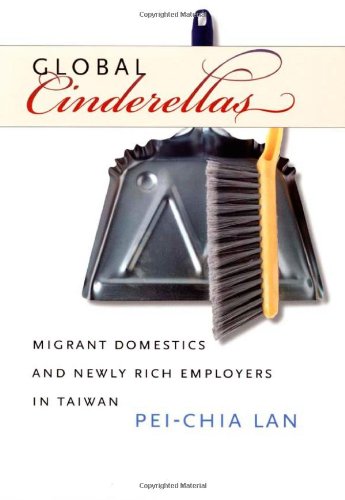
Global Cinderellas: Migrant Domestics and Newly Rich Employers in Taiwan
📄 Viewing lite version
Full site ›
Book Details
Author(s)Pei-Chia Lan
PublisherDuke University Press Books
ISBN / ASIN0822337428
ISBN-139780822337423
AvailabilityUsually ships in 24 hours
Sales Rank1,440,932
CategoryBusiness & Economics
MarketplaceUnited States 🇺🇸
Description ▲
Migrant women are the primary source of paid domestic labor around the world. Since the 1980s, the newly prosperous countries of East Asia have recruited foreign household workers at a rapidly increasing rate. Many come from the Philippines and Indonesia. Pei-Chia Lan interviewed and spent time with dozens of Filipina and Indonesian domestics working in and around Taipei as well as many of their Taiwanese employers. On the basis of the vivid ethnographic detail she collected, Lan provides a nuanced look at how boundaries between worker and employer are maintained and negotiated in private households. She also sheds light on the fate of the workers, global Cinderellas who seek an escape from poverty at home only to find themselves treated as disposable labor abroad.
More Books in Business & Economics
Business Cycles and Forecasting
View
Development Economics: Its Position in the Present Sta…
View
Cost Systems Design
View
So You Want to Dance on Broadway
View
The Blueprint: Reviving Innovation, Rediscovering Risk…
View
Managing IT Outsourcing, Second Edition
View
Education and the Creation of Capital in the Early Ame…
View
Global Corruption Report 2005: Special Focus: Corrupti…
View
More Tales for Trainers: Using Stories and Metaphors t…
View