In compiling THE FARMERS GUIDE BOOK the writer has ohad in mind the demands of many for a more condensed and couS venient source of information than is afforded by the current agricultural works. The average farmer has little time and less inclination to read three or four pages for a fact that might better have been expressed in a single sentence. He wants his information boiled down, and free from technicalities or literary verboseness. The book is designed, primarily, for two classes: 1. The beginners who are anxious to start right; 2. The average farmer who, not having had the advantages of an agricultural college training, wishes to avail himself of at least some of the information which those institutions teach. The method of expression used by the writer has enabled him to convey, in one small book, information that would, ordinarily, occupy several volumes. The live topics of modern farming, such as Fertilizers, Lime, A lfalfa, The Orchard, Rotation of Crops, Cement. etc., have been fully and carefully treated. These chapters will not only be of inestimable value to the farmer, but they will be of great assistance to all teachers and students of agriculture. The directory of firms, which is an important feature of the book, will be enlarged as later editions are published; ;ind all firms whose dealings have been found questionable will be dropped. It is the purpose to make the list not only complete, but reliable. Integrity and square dealing are all that is required for a listing. Unreliable concerns will not, knowingly, be ineluded for any consideration. The writer hereby acknowledges his indebtedness to the many agricultural colleges and experiment stations who have so freely answered his questions; to the agricultural press, especially toT heR ural New Yorker, from whose columns he has freely drawn; toD octor L. S. Backus, of theS tate University
(Typographical errors above are due to OCR software and don't occur in the book.)
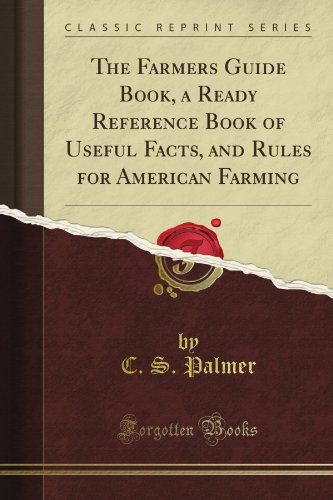
The Farmers Guide Book, a Ready Reference Book of Useful Facts, and Rules for American Farming (Classic Reprint)
📄 Viewing lite version
Full site ›
Book Details
Author(s)C. S. Palmer
PublisherForgotten Books
ISBN / ASINB00876F3E2
ISBN-13978B00876F3E4
AvailabilityUsually ships in 24 hours
MarketplaceUnited States 🇺🇸