EXECUTIVE SUMMARY
EOD
Multi-Service Tactics, Techniques, and Procedures for Explosive Ordnance Disposal in a Joint Environment
This manual –
• Describes Service-specific EOD organizations, capabilities, equipment, doctrine, and training.
• Provides joint EOD command and control (C2) considerations.
• Provides guidance for planning and conducting EOD operations in a joint environment.
• Establishes procedures for information management (IM) and operational and intelligence reporting.
Introduction
This publication documents the C2 considerations and procedures for conducting EOD operations in a joint environment. These TTP are necessary to coordinate and integrate multi-Service EOD operations to facilitate efficient and safe joint EOD operations. The EOD force performed in a joint capacity during many recent operations; however, most of the command relationships and coordination requirements were ad hoc. Each Service routinely deploys EOD forces into a theater and assigns the force based on Service needs rather than the theater needs as a whole. This MTTP provides many considerations for employing EOD forces in a joint capacity and provides C2 options for the geographic combatant commander and commander, joint task force (CJTF) to consider. This MTTP also highlights the EOD capabilities and force structures for each Service.
Concept and Organization
Chapters I and II highlight the significant joint C2 issues when preparing to employ EOD forces. The focus of the Service chapters (chapters III-VI) is for the benefit of non-EOD commanders and staff and EOD commanders and staff from other Services to gain an understanding of the personnel/equipment and doctrine utilized within the other Services. Finally, in an effort to expedite C2 requirements for the senior theater EOD commander, the MTTP offers standardized EOD reporting formats which each Service has agreed to use when operating in a joint environment. Countering unexploded explosive ordnance (UXO) and the threat it creates during all operations is challenging. This MTTP provides the necessary command structure to assist (rather than impair) efficient EOD operations. This challenge becomes easier as the level of knowledge regarding other Services’ EOD forces and their contributions to the mission increase.
Chapters
Chapter I – Introduces the Department of Defense (DOD) EOD mission, capabilities, and common characteristics of the EOD force. This chapter also provides a historical perspective of EOD operations and the impact the threat has had on US operations.
Chapter II – Describes the purpose for conducting EOD operations as a joint force, provides historical examples, and employment options for the joint force commander (JFC) to consider when employing EOD forces. This chapter also provides guidance for standing up a JEODOC.
Chapter III – Discusses Army EOD operations to include the Army EOD mission, Service doctrine, Army organizations and capabilities, and specific Army EOD training.
Chapter IV – Discusses Marine Corps EOD operations to include the Marine Corps EOD mission, Service doctrine, Marine Corps organizations and capabilities, and specific Marine Corps EOD training.
Chapter V – Discusses Navy EOD operations to include the Navy EOD mission, Service doctrine, Navy EOD organizations and capabilities, and specific Navy EOD training.
Chapter VI – Discusses Air Force EOD operations to include Air Force EOD mission, Service doctrine, Air Force organizations and capabilities, and specific Air Force EOD training.
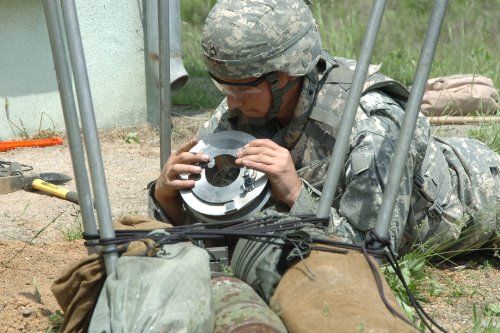
EOD - MULTI-SERVICE TACTICS, TECHNIQUES, AND PROCEDURES FOR EXPLOSIVE ORDNANCE DISPOSAL IN A JOINT ENVIRONMENT
📄 Viewing lite version
Full site ›
Price not listed
🛒 Buy New on Amazon 🇺🇸
Book Details
Author(s)U.S. Department Of Defense
PublisherU.S. Department Of Defense
ISBN / ASINB00JHMB7MM
ISBN-13978B00JHMB7M5
Sales Rank424,955
MarketplaceUnited States 🇺🇸