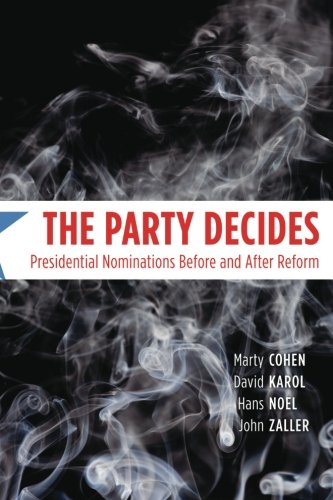


The Party Decides: Presidential Nominations Before and After Reform (Chicago Studies in American Politics)
Book Details
Publisher
University Of Chicago Press
ISBN / ASIN
0226112373
ISBN-13
9780226112374
Availability
Usually ships in 24 hours
Sales Rank
#274,215
Category
Political Science
Marketplace
United States 🇺🇸
Ratings & Reviews
No reviews yet — be the first!
No reviews yet.
Description
Throughout the contest for the 2008 Democratic presidential nomination, politicians and voters alike worried that the outcome might depend on the preferences of unelected superdelegates. This concern threw into relief the prevailing notion that such unusually competitive cases notwithstanding people, rather than parties, should and do control presidential nominations. But for the past several decades, The Party Decides shows, unelected insiders in both major parties have effectively selected candidates long before citizens reached the ballot box.
Tracing the evolution of presidential nominations since the 1790s, this volume demonstrates how party insiders have sought since America s founding to control nominations as a means of getting what they want from government. Contrary to the common view that the party reforms of the 1970s gave voters more power, the authors contend that the most consequential contests remain the candidates fights for prominent endorsements and the support of various interest groups and state party leaders. These invisible primaries produce frontrunners long before most voters start paying attention, profoundly influencing final election outcomes and investing parties with far more nominating power than is generally recognized.
Tracing the evolution of presidential nominations since the 1790s, this volume demonstrates how party insiders have sought since America s founding to control nominations as a means of getting what they want from government. Contrary to the common view that the party reforms of the 1970s gave voters more power, the authors contend that the most consequential contests remain the candidates fights for prominent endorsements and the support of various interest groups and state party leaders. These invisible primaries produce frontrunners long before most voters start paying attention, profoundly influencing final election outcomes and investing parties with far more nominating power than is generally recognized.