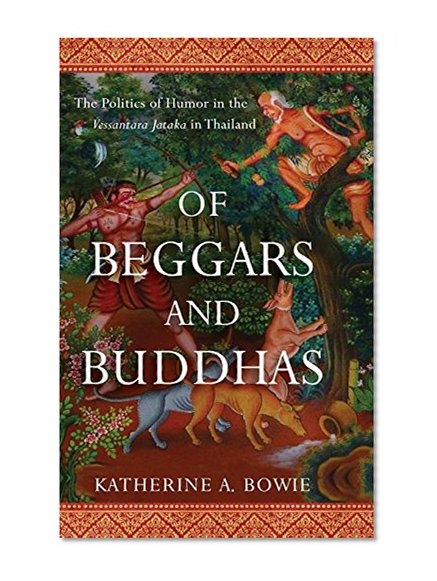


Of Beggars and Buddhas: The Politics of Humor in the Vessantara Jataka in Thailand (New Perspectives in Se Asian Studies)
Book Details
Author(s)
Katherine A. Bowie
Publisher
University of Wisconsin Press
ISBN / ASIN
0299309509
ISBN-13
9780299309503
Availability
Usually ships in 24 hours
Sales Rank
#3,279,068
Category
History
Marketplace
United States 🇺🇸
Ratings & Reviews
No reviews yet — be the first!
No reviews yet.
Description
The 547 Buddhist jatakas, or verse parables, recount the Buddha s lives in previous incarnations. In his penultimate and most famous incarnation, he appears as the Prince Vessantara, perfecting the virtue of generosity by giving away all his possessions, his wife, and his children to the beggar Jujaka. Taking an anthropological approach to this two-thousand-year-old morality tale, Katherine A. Bowie highlights significant local variations in its interpretations and public performances across three regions of Thailand over 150 years.
The Vessantara Jataka has served both monastic and royal interests, encouraging parents to give their sons to religious orders and intimating that kings are future Buddhas. But, as Bowie shows, characterizations of the beggar Jujaka in various regions and eras have also brought ribald humor and sly antiroyalist themes to the story. Historically, these subversive performances appealed to popular audiences even as they worried the conservative Bangkok court. The monarchy sporadically sought to suppress the comedic recitations. As Thailand has changed from a feudal to a capitalist society, this famous story about giving away possessions is paradoxically being employed to promote tourism and wealth.
The Vessantara Jataka has served both monastic and royal interests, encouraging parents to give their sons to religious orders and intimating that kings are future Buddhas. But, as Bowie shows, characterizations of the beggar Jujaka in various regions and eras have also brought ribald humor and sly antiroyalist themes to the story. Historically, these subversive performances appealed to popular audiences even as they worried the conservative Bangkok court. The monarchy sporadically sought to suppress the comedic recitations. As Thailand has changed from a feudal to a capitalist society, this famous story about giving away possessions is paradoxically being employed to promote tourism and wealth.