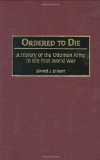
Ottoman Army Effectiveness in World War I: A Comparative Study (Military History and Policy)
No reviews yet.
This volume examines how the Ottoman Army was able to evolve and maintain a high level of overall combat effectiveness despite the primitive nature of the Ottoman State during the First World War.
Structured around four case studies, at the operational and tactical level, of campaigns involving the Ottoman Empire and the British Empire: Gallipoli in 1915, Kut in 1916, Third Gaza-Beersheba in 1917, and Megiddo in 1918. For each of these campaigns, particular emphasis is placed on examining specific elements of combat effectiveness and how they affected that particular battle.
The prevalent historiography attributes Ottoman battlefield success primarily to external factors - such as the presence of German generals and staff officers; climate, weather and terrain that adversely affected allied operations; allied bumbling and amateurish operations; and inadequate allied intelligence. By contrast, Edward J. Erickson argues that the Ottoman Army was successful due to internal factors, such as its organizational architecture, a hardened cadre of experienced combat leaders, its ability to organize itself for combat, and its application of the German style of war.
Ottoman Army Effectiveness in World War I will be of great interest to students of the First World War, military history and strategic studies in general.