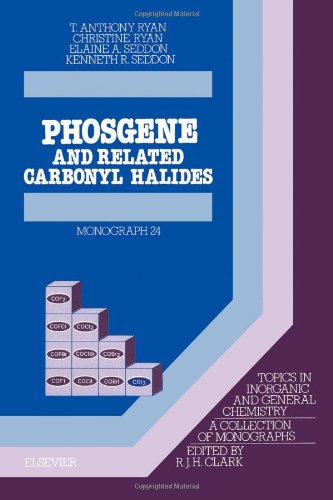


Phosgene: And Related Carbonyl Halides (Volume 24) (Topics in Inorganic and General Chemistry, Volume 24)
No reviews yet.
Although more than 7000 papers have appeared on phosgene and some 1000 papers on its analogues, this is the first book on these interesting chemicals. It presents a critical treatise of phosgene, ranging from its discovery and subsequent use as a war gas to some potential applications of the material into the 21st century. It includes chapters on biological effects and industrial hygiene; on synthesis, formation and manufacture; analysis, uses, environmental effects, and physical and thermodynamic properties. Reactions with organic and inorganic materials are described. Four of the seventeen chapters are devoted to a description of the carbonyl halides (especially carbonyl difluoride) related to phosgene, and a special section deals collectively with the electronic structures of carbonyl halide molecules.
Featuring the first-ever comprehensive discussion of the medical effects of phosgene poisoning and the most modern methods of treating exposure victims, the book will be of interest to historians and militarists and those working in the chemical industries (heavy chemicals, agricultural and pharmaceutical), university libraries, hospitals, medical research centres, museums, environmental research centres, poison units and health and safety institutions world-wide.
