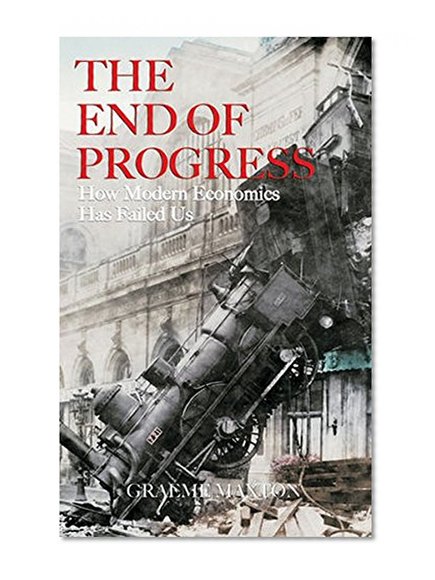


The End of Progress: How Modern Economics Has Failed Us
Book Details
Author(s)Graeme Maxton
PublisherWiley
ISBN / ASIN0470829982
ISBN-139780470829981
AvailabilityUsually ships in 24 hours
Sales Rank1,897,527
CategoryBusiness & Economics
MarketplaceUnited States 🇺🇸
Description
Q&A with Graeme Maxton, Author of The End of Progress What's The End of Progress about? A: The End of Progress looks at where our societies are headed. There are a number of difficult challenges ahead which will constrain humanity's progress and we need to respond to these. We are burdened with debt, certainly in the West. We face resource shortages. Oil, water and many other raw materials are beginning to run short. We have no immediate alternatives to many of these. We are running up against social barriers too. The gap between the haves and have-nots has grown alarmingly. Standards of education are falling in many countries. The internet is addling our brains. Most vitally, we have become obsessed with economic growth as a measure of human development. All of these problems are down to faulty thinking, down to modern economics. Why did you write it? I was born near Adam Smith's birthplace. Smith is the father of economics and one of the Enlightenment's greatest thinkers. I have always viewed his work and that period in history with great interest. During the Enlightenment we made great leaps forward, socially, technologically, economically and in the arts and literature. Today, we focus almost entirely on economic growth as a means of progress, which is driven mostly by consumption. We have taken most of Smith's principles and many other enlightenment ideas about freedom, democracy and social responsibility - and trashed them. This has brought us mountains of debt, wasteful resource use and, for many, misery. I think we can do better. Are there steps we can take to respond to the challenges we face? There is a lot we can do. We can change the way we think quite easily. Instead of focusing on economic growth, we can try to improve our world. There are many ways we can make the lives of people better, make them happier, less driven by consumption. We can put more emphasis on technology, science, spiritual pursuits, education and family. We can price the world's resources properly and tax hard work less. We can use energy more efficiently. We can reduce the gap between rich and poor. Of course, there are many hurdles to us achieving this. But if we think differently, we can achieve a new renaissance, a new era of discovery and reinvention based upon a new set of values that ensure a more sustainable and economically balanced world. Why should I read it? The challenges we face affect all of us. There is no point in knowing there is trouble ahead and not doing something about it. How would you explain that to your grandchildren? Nor can we look to today's politicians or economists to fix the problems because they created them. It is up to all of us, you and me. We all have a responsibility. Although it is not a self-help book, The End of Progress helps you understand the challenges we face, the change in thinking that is needed and what you can do in response.
More Books in Business & Economics


