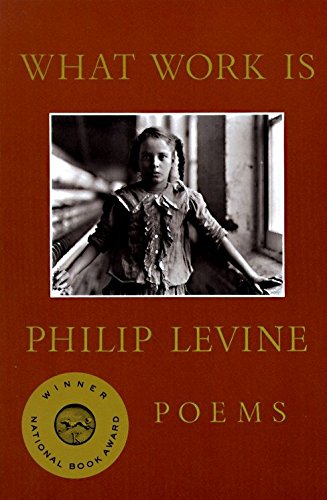


What Work Is: Poems
Book Details
Author(s)
Levine, Philip
Publisher
Alfred A. Knopf
ISBN / ASIN
0679740589
ISBN-13
9780679740582
Availability
In Stock.
Sales Rank
#125,629
Category
Paperback
Marketplace
United States 🇺🇸
Ratings & Reviews
No reviews yet — be the first!
No reviews yet.
Description
If there is such a thing as a working man's poet, then Philip Levine is it. Born into a blue-collar family in Detroit, Levine grew up amidst the steel mills and auto factories of Motor City. Laboring in the plants radicalized both Levine's politics and his art; in early works such as On the Edge and Not This Pig, he explored the gritty despair of urban working-class life, a reality that has continued to run through his later poetry as well. In his 1991 National Book Award-winning What Work Is, Levine revisits the scenes of his youth--only now the factories are shut down, the towns that depended on them devastated. In the title poem, Levine conveys a multitude of meaning in the single image of men standing in line waiting for work:
the sad refusal to give in toFactory workers aren't the only subjects here, however; in "Among Children" (an American response to Yeats's "Among School Children") Levine contemplates "the children of Flint, their fathers / work at the spark plug factory or truck / bottled water in 5 gallon sea-blue jugs / to the widows of the suburbs." For these children, he contends, the Book of Job would be the most appropriate reading.
rain, to the hours wasted waiting,
to the knowledge that somewhere ahead
a man is waiting who will say, "No,
we're not hiring today," for any
reason he wants.
What work is, Levine tells us, is the accretion of a lifetime of experiences, compromises, and disappointments. It is drinking gin for the first time at 14, a premature leap into manhood; it is that first job with its double-edged promise of a "new life of working and earning," and later the unrealized dreams of escaping that life. Levine's poems move back and forth in time, touch on issues of race, religion, education--even gardening--and leave the reader with a moving portrait of working-class life from the 1940s to the present day. --Alix Wilber