Buy on Amazon
https://www.ebooknetworking.net/books_detail-0684870541.html
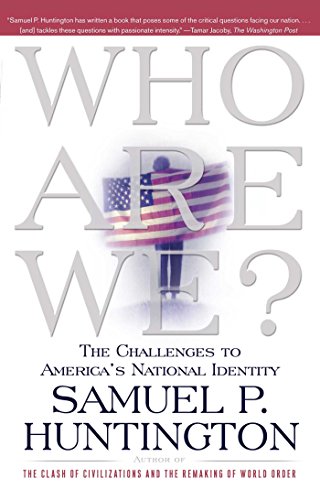
Who Are We?: The Challenges to America's National Identity
Book Details
Author(s)Huntington, Samuel P.
PublisherSimon & Schuster
ISBN / ASIN0684870541
ISBN-139780684870540
AvailabilityIn Stock
Sales Rank14
CategoryHistory
MarketplaceUnited States 🇺🇸
Description
In his seminal work The Clash of Civilizations and the Remaking of World Order, Samuel Huntington argued provocatively and presciently that with the end of the cold war, civilizations were replacing ideologies as the new fault lines in international politics.
Now in his controversial new work, Who Are We?, Huntington focuses on an identity crisis closer to home as he examines the impact other civilizations and their values are having on our own country.
America was founded by British settlers who brought with them a distinct culture, says Huntington, including the English language, Protestant values, individualism, religious commitment, and respect for law. The waves of immigrants that later came to the United States gradually accepted these values and assimilated into America's Anglo-Protestant culture. More recently, however, our national identity has been eroded by the problems of assimilating massive numbers of primarily Hispanic immigrants and challenged by issues such as bilingualism, multiculturalism, the devaluation of citizenship, and the denationalization of American elites.
September 11 brought a revival of American patriotism and a renewal of American identity, but already there are signs that this revival is fading. Huntington argues the need for us to reassert the core values that make us Americans. Timely and thought-provoking, Who Are We? is an important book that is certain to shape our national conversation about who we are.
Now in his controversial new work, Who Are We?, Huntington focuses on an identity crisis closer to home as he examines the impact other civilizations and their values are having on our own country.
America was founded by British settlers who brought with them a distinct culture, says Huntington, including the English language, Protestant values, individualism, religious commitment, and respect for law. The waves of immigrants that later came to the United States gradually accepted these values and assimilated into America's Anglo-Protestant culture. More recently, however, our national identity has been eroded by the problems of assimilating massive numbers of primarily Hispanic immigrants and challenged by issues such as bilingualism, multiculturalism, the devaluation of citizenship, and the denationalization of American elites.
September 11 brought a revival of American patriotism and a renewal of American identity, but already there are signs that this revival is fading. Huntington argues the need for us to reassert the core values that make us Americans. Timely and thought-provoking, Who Are We? is an important book that is certain to shape our national conversation about who we are.