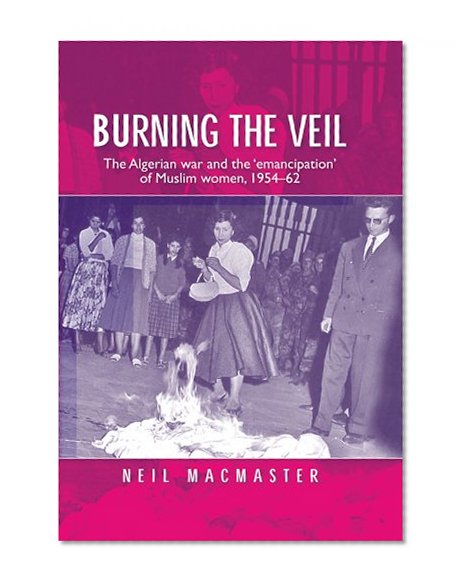
During the Algerian War of decolonisation, French counter-insurgency specialists set out to 'emancipate' Muslim women from the veil, seclusion and perceived male oppression. The claimed French liberation was contradicted by the violence inflicted on women through rape, torture and destruction of villages. Burning the veil, the first study to draw upon sources from newly-opened archives explores the roots of this contradiction in the theory of 'revolutionary warfare', and the attempt to defeat the National Liberation Front (FLN) by penetrating the Muslim family, seen as a bastion of resistance.
The strategy was implemented through elaborate mass unveiling ceremonies, radio and cinema propaganda, women's circles, mobile health teams, implementation of the female franchise, and a progressive reform of Muslim family and marriage law. The FLN attempted to counter this policy through the propaganda representation of independent, heroic women who placed bombs or fought in guerrilla units. But this propaganda was belied by entrenched patriarchal structures and values, and the post-Independence regime, able to reject 'emancipation' of women as a colonial and Western intrusion, blocked reform for decades.
French 'emancipation', striking parallels with contemporary Afghanistan and Iraq, produced a backlash that led to deterioration in the social and political position of Muslim women. This analysis of how and why Western attempts to recreate Muslim women in its own image ended in catastrophe has contemporary relevance and will be important to students, postgraduates and academics engaged in the study of French and colonial history, feminism, counter-insurgency and contemporary Islam.