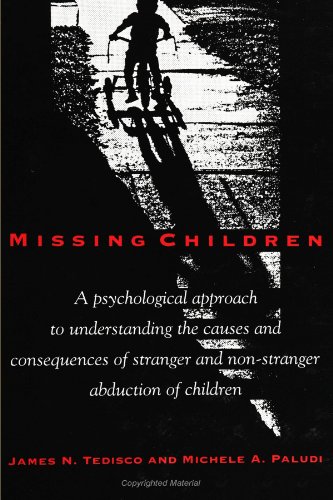


Missing Children: A Psychological Approach to Understanding the Causes and Consequences of Stranger and Non-Stranger Abduction of Children (S U N Y ... Women) (SUNY series, The Psychology of Women)
Book Details
Author(s)
Tedisco, James N.
Publisher
State University of New York Press
ISBN / ASIN
079142880X
ISBN-13
9780791428801
Availability
In Stock.
Sales Rank
#497,695
Marketplace
United States 🇺🇸
Description
Focuses on variables that assist in confronting and preventing child abductions, including teacher training, public education and awareness, psychotherapeutic techniques for families and friends of abducted children as well as the children themselves. "Even though parents believe they are capable of keeping their children safe, few are aware of the plethora of ways child abductors can achieve their goals. The public needs to be aware that most child abductions occur at the hands of parents or other family members. The array of resources and tips contained in this volume are invaluable. The topic is significant for every parent, teacher, daycare worker, all police personnel, all child protective services workers, and all therapists." -- Paula K. Lundberg-Love, University of Texas-Tyler Child abduction is the most widespread form of child victimization studied. In 1992 alone, a total of 27,553 cases of missing children were reported in New York State through the Missing Children Register. The majority of missing children cases involved suspected runaways. Abduction cases accounted for one percent of the total report; those committed by family members comprised the most frequent form of abduction (as opposed to abduction by strangers). In addition, 88 percent of the children reported missing were age 13 or older, 60 percent were girls, and 58 percent were white. Child abduction is a serious socio-economic problem. Until now there has been no text that addresses the incidence, psychological dimensions, and explanatory models of child abductions. This book fills a need by focusing on variables that assist in confronting and preventing child abductions, including teacher training, public education and awareness, psychotherapeutic techniques for families and friends of abducted children as well as the children themselves.
