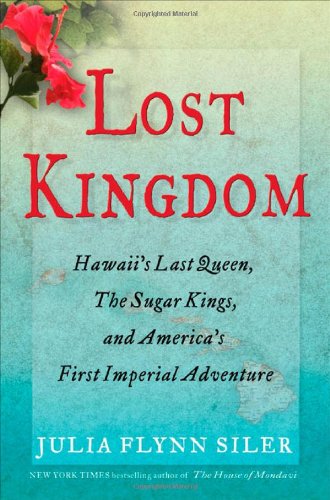
Lost Kingdom: Hawaii's Last Queen, the Sugar Kings and America's First Imperial Adventure
Book Details
Author(s)Siler, Julia Flynn
PublisherAtlantic Monthly Press
ISBN / ASIN0802120016
ISBN-139780802120014
AvailabilityIn stock. Usually ships within 2 to 3 days.
Sales Rank505,746
MarketplaceUnited States 🇺🇸
Description
Around 200 A.D., intrepid Polynesians arrived at a group of volcanic islands in the North Pacific. For centuries, their descendants lived with little contact from the western world. In 1778, their isolation was shattered with the arrival of Captain Cook.
Deftly weaving together a memorable cast of characters, Lost Kingdom brings to life the ensuing clash between a vulnerable Polynesian people and relentlessly expanding capitalist powers. Portraits of royalty and rogues, sugar barons, and missionaries combine into a sweeping tale of the Hawaiian Kingdom's rise and fall.
At the center of the story is Lili'uokalani, the last queen of Hawai'i. Born in 1838, she lived through the nearly complete economic transformation of the islands. Lucrative sugar plantations gradually subsumed the land, owned almost exclusively by white planters, dubbed the "Sugar Kings." Hawai'i became a prize in the contest between America, Britain, and France, each seeking to expand their military and commercial influence in the Pacific.
The monarchy had become a figurehead, victim to manipulation from the wealthy sugar plantation owners. Lili'uokalani was determined to enact a constitution to reinstate the monarchy's power but was outmaneuvered by the U.S. The annexation of Hawai'i had begun, ushering in a new century of American imperialism.
Deftly weaving together a memorable cast of characters, Lost Kingdom brings to life the ensuing clash between a vulnerable Polynesian people and relentlessly expanding capitalist powers. Portraits of royalty and rogues, sugar barons, and missionaries combine into a sweeping tale of the Hawaiian Kingdom's rise and fall.
At the center of the story is Lili'uokalani, the last queen of Hawai'i. Born in 1838, she lived through the nearly complete economic transformation of the islands. Lucrative sugar plantations gradually subsumed the land, owned almost exclusively by white planters, dubbed the "Sugar Kings." Hawai'i became a prize in the contest between America, Britain, and France, each seeking to expand their military and commercial influence in the Pacific.
The monarchy had become a figurehead, victim to manipulation from the wealthy sugar plantation owners. Lili'uokalani was determined to enact a constitution to reinstate the monarchy's power but was outmaneuvered by the U.S. The annexation of Hawai'i had begun, ushering in a new century of American imperialism.