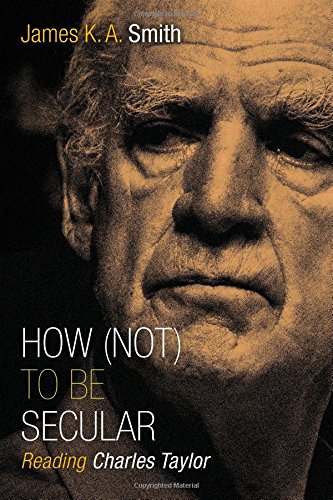


How (Not) to Be Secular: Reading Charles Taylor
Book Details
Author(s)
James K. A. Smith
Publisher
Eerdmans
ISBN / ASIN
0802867618
ISBN-13
9780802867612
Availability
Usually ships in 24 hours
Sales Rank
#26,824
Category
Philosophy
Marketplace
United States 🇺🇸
Description
How (Not) to Be Secular is what Jamie Smith calls "your hitchhiker's guide to the present" -- it is both a reading guide to Charles Taylor's monumental work A Secular Age and philosophical guidance on how we might learn to live in our times.
Taylor's landmark book A Secular Age (2007) provides a monumental, incisive analysis of what it means to live in the post-Christian present -- a pluralist world of competing beliefs and growing unbelief. Jamie Smith's book is a compact field guide to Taylor's insightful study of the secular, making that very significant but daunting work accessible to a wide array of readers.
Even more, though, Smith's How (Not) to Be Secular is a practical philosophical guidebook, a kind of how-to manual on how to live in our secular age. It ultimately offers us an adventure in self-understanding and maps out a way to get our bearings in today's secular culture, no matter who "we" are -- whether believers or skeptics, devout or doubting, self-assured or puzzled and confused. This is a book for any thinking person to chew on.
Taylor's landmark book A Secular Age (2007) provides a monumental, incisive analysis of what it means to live in the post-Christian present -- a pluralist world of competing beliefs and growing unbelief. Jamie Smith's book is a compact field guide to Taylor's insightful study of the secular, making that very significant but daunting work accessible to a wide array of readers.
Even more, though, Smith's How (Not) to Be Secular is a practical philosophical guidebook, a kind of how-to manual on how to live in our secular age. It ultimately offers us an adventure in self-understanding and maps out a way to get our bearings in today's secular culture, no matter who "we" are -- whether believers or skeptics, devout or doubting, self-assured or puzzled and confused. This is a book for any thinking person to chew on.
Similar Products