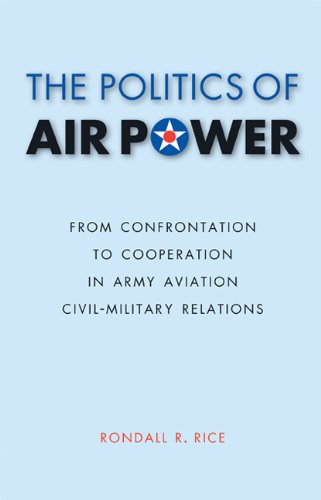
The Politics of Air Power: From Confrontation to Cooperation in Army Aviation Civil-Military Relations (Studies in War, Society, and the Militar) Buy on Amazon

https://www.ebooknetworking.net/books_detail-0803224966.html

The Politics of Air Power: From Confrontation to Cooperation in Army Aviation Civil-Military Relations (Studies in War, Society, and the Militar)

22.46 24.95 USD
Buy New on Amazon 🇺🇸 Buy Used — $17.20

Usually ships in 24 hours

Book Details

ISBN / ASIN0803224966
ISBN-139780803224964
AvailabilityUsually ships in 24 hours
Sales Rank3,788,182
MarketplaceUnited States  🇺🇸

Description

The Politics of Air Power examines the turbulent development of relations between U.S. Army aviation leaders and civilian officials during the 1920s and 1930s. In the early 1920s Brigadier General William “Billy” Mitchell and a group of Army Air Service officers tried to force the creation of an independent air force against presidential wishes. They forged political alliances, used propaganda to arouse public sentiment, and circumvented their superiors to appeal directly to congressmen. Mitchell, a flamboyant, popular, and powerful personality, led these efforts and was ultimately court-martialed.

Following Mitchell, aviation leaders were careful to avoid distressing presidents, Congresses, and an American public upset at Mitchell’s challenges to civilian control. Tensions persisted, however, and the Air Corps took another step backward when Major General Benjamin Foulois misled Congress and the president and revived the image of the Air Corps as a radical element. Not until Major Generals Oscar Westover and “Hap” Arnold, a former radical himself, abandoned the crusade for immediate independence and emphasized cooperation within the Army and with civilian authorities did the Air Corps develop a stable and cooperative relationship with the president and Congress. Rondall R. Rice demonstrates that during the interwar period, civil-military relations between Army aviation leaders and civilian officials developed unevenly from confrontation to cooperation.

More Books by Rondall R. Rice

Donate to EbookNetworking
Prev
Next