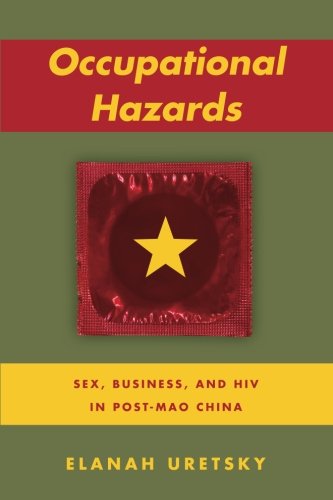


Occupational Hazards: Sex, Business, and HIV in Post-Mao China
Book Details
Author(s)
Elanah Uretsky
Publisher
Stanford University Press
ISBN / ASIN
0804797536
ISBN-13
9780804797535
Availability
Usually ships in 24 hours
Sales Rank
#2,294,910
Marketplace
United States 🇺🇸
Ratings & Reviews
No reviews yet — be the first!
No reviews yet.
Description
Doing business in China can be hazardous to your health. Occupational Hazards follows a group of Chinese businessmen and government officials as they conduct business in Beijing and western Yunnan Province, exposing webs of informal networks that help businessmen access political favors. These networks are built over liquor, cigarettes, food, and sex, turning risky behaviors into occupational hazards.
Elanah Uretsky's ethnography follows these powerful men and their vulnerabilities to China's burgeoning epidemics of sexually transmitted infections (STIs) and HIV/AIDS. Examining the relationship between elite masculine networking practices and vulnerability to HIV infection, Occupational Hazards includes the stories of countless government officials and businessmen who regularly visit commercial sex workers but resist HIV testing for fear of threatening their economic and political status. Their fate is further complicated by a political system that cannot publicly acknowledge such risk and by authoritative international paradigms that limit the reach of public health interventions. Ultimately, Uretsky offers insights into how complex socio-cultural and politico-economic negotiations affect the development and administration of China's HIV epidemic.
Elanah Uretsky's ethnography follows these powerful men and their vulnerabilities to China's burgeoning epidemics of sexually transmitted infections (STIs) and HIV/AIDS. Examining the relationship between elite masculine networking practices and vulnerability to HIV infection, Occupational Hazards includes the stories of countless government officials and businessmen who regularly visit commercial sex workers but resist HIV testing for fear of threatening their economic and political status. Their fate is further complicated by a political system that cannot publicly acknowledge such risk and by authoritative international paradigms that limit the reach of public health interventions. Ultimately, Uretsky offers insights into how complex socio-cultural and politico-economic negotiations affect the development and administration of China's HIV epidemic.
