Buy on Amazon
https://www.ebooknetworking.net/books_detail-0807833797.html
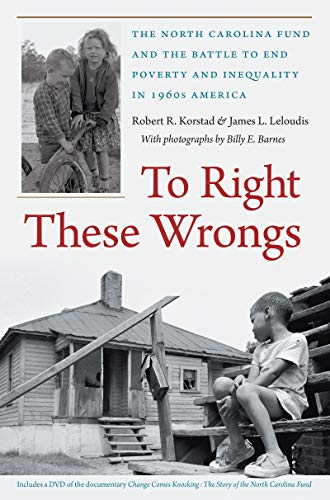
To Right These Wrongs: The North Carolina Fund and the Battle to End Poverty and Inequality in 1960s America
Book Details
ISBN / ASIN0807833797
ISBN-139780807833797
AvailabilityUsually ships in 24 hours
Sales Rank3,044,463
CategorySocial Science
MarketplaceUnited States 🇺🇸
Description
When Governor Terry Sanford established the North Carolina Fund in 1963, he saw it as a way to provide a better life for the "tens of thousands whose family income is so low that daily subsistence is always in doubt." Illustrated with evocative photographs by Billy Barnes, To Right These Wrongs offers a lively account of this pioneering effort in America's War on Poverty.
Robert Korstad and James Leloudis describe how the Fund's initial successes grew out of its reliance on private philanthropy and federal dollars and its commitment to the democratic mobilization of the poor. Both were calculated tactics designed to outflank conservative state lawmakers and entrenched local interests that nourished Jim Crow, perpetuated one-party politics, and protected an economy built on cheap labor. By late 1968, when the Fund closed its doors, a resurgent politics of race had gained the advantage, led by a Republican Party that had reorganized itself around opposition to civil rights and aid to the poor.
The North Carolina Fund came up short in its battle against poverty, but its story continues to be a source of inspiration and instruction for new generations of Americans.
Robert Korstad and James Leloudis describe how the Fund's initial successes grew out of its reliance on private philanthropy and federal dollars and its commitment to the democratic mobilization of the poor. Both were calculated tactics designed to outflank conservative state lawmakers and entrenched local interests that nourished Jim Crow, perpetuated one-party politics, and protected an economy built on cheap labor. By late 1968, when the Fund closed its doors, a resurgent politics of race had gained the advantage, led by a Republican Party that had reorganized itself around opposition to civil rights and aid to the poor.
The North Carolina Fund came up short in its battle against poverty, but its story continues to be a source of inspiration and instruction for new generations of Americans.


