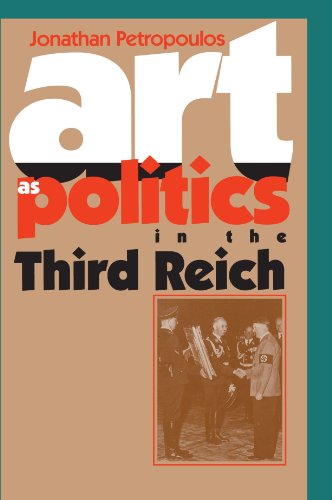


Art As Politics in the Third Reich
Book Details
Description
Petropoulos begins by tracing the evolution of official aesthetic policy, from the purges of museum staff and academics labeled as 'undesirable' in 1933 to the confiscation of Jewish-owned artworks in the late 1930s and the organized plundering of art from occupied areas during the war. He then reconstructs the collections of a dozen prominent Nazi officials—including Hitler, Gšring, Goebbels, Himmler, Speer, and Ribbentrop—and argues that their private holdings defined their relationships to one another within the Nazi hierarchy in addition to reflecting their racist and nationalist beliefs. According to Petropoulos, art collecting offered the political elite a way to achieve legitimacy and social standing, thereby providing a common cultural language for the leaders of the Third Reich.
More Books by Jonathan Petropoulos

