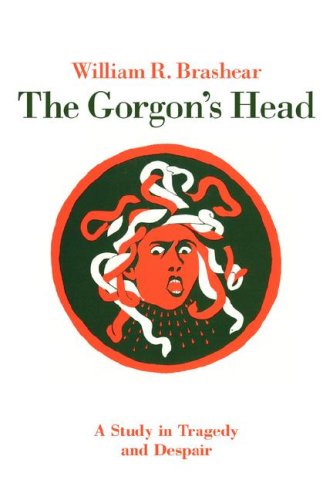


The Gorgon's Head: A Study in Tragedy and Despair
Book Details
Description
For him, Aristotle's intellectualization of tragedy distorted it for centuries because the tragic sense of life is experiential and intuitive rather than logical and syllogistic. In the later works of Schopenhauer, Nietzsche, and Spangler, Brashear finds the beginnings of the understanding of tragedy that developed in nineteenth- and twentieth-century literature. In careful considerations of such writers as Shakespeare, Tennyson, Conrad, Housman, Shaw, O'Neill, and Arthur Miller, Brashear refines his views of tragedy and tests their validity. The chapter on Tennyson supersedes and goes well beyond The Living Will, his earlier study of the poet.
Brashear's discussions of individual writers reinforce each other and point to several important conclusions about the tragic vision and tragic art. Most significant among his conclusions is that tragedy is often taken to be more benign and positive than it really is and that if the tragic experience is essentially healthy and rewarding, it is so because it involves a confrontation that broadens, strengthens, and stabilizes and not because it suggests any ultimate solution to the human condition.
