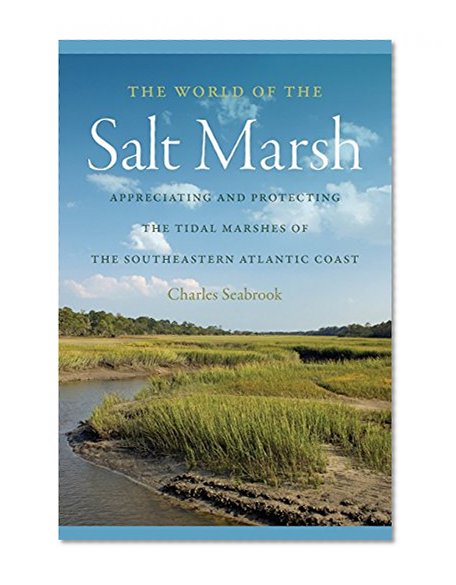


The World of the Salt Marsh: Appreciating and Protecting the Tidal Marshes of the Southeastern Atlantic Coast (Wormsloe Foundation Nature Book Ser.)
The World of the Salt Marsh is a wide-ranging exploration of the southeastern coast its natural history, its people and their way of life, and the historic and ongoing threats to its ecological survival.
Focusing on areas from Cape Hatteras, North Carolina, to Cape Canaveral, Florida, Charles Seabrook examines the ecological importance of the salt marsh, calling it a biological factory without equal. Twice-daily tides carry in a supply of nutrients that nourish vast meadows of spartina (Spartina alterniflora) a crucial habitat for creatures ranging from tiny marine invertebrates to wading birds. The meadows provide vital nurseries for 80 percent of the seafood species, including oysters, crabs, shrimp, and a variety of finfish, and they are invaluable for storm protection, erosion prevention, and pollution filtration.
Seabrook is also concerned with the plight of the people who make their living from the coast s bounty and who carry on its unique culture. Among them are Charlie Phillips, a fishmonger whose livelihood is threatened by development in McIntosh County, Georgia, and Vera Manigault of Mount Pleasant, South Carolina, a basket maker of Gullah-Geechee descent, who says that the sweetgrass needed to make her culturally significant wares is becoming scarcer.
For all of the biodiversity and cultural history of the salt marshes, many still view them as vast wastelands to be drained, diked, or improved for development into highways and subdivisions. If people can better understand and appreciate these ecosystems, Seabrook contends, they are more likely to join the growing chorus of scientists, conservationists, fishermen, and coastal visitors and residents calling for protection of these truly amazing places.


