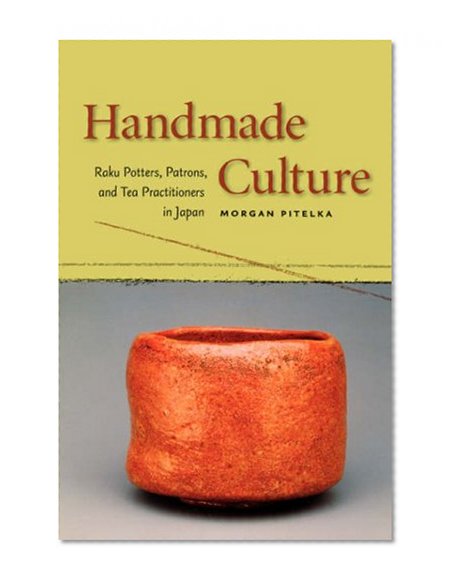


Handmade Culture: Raku Potters, Patrons, and Tea Practitioners in Japan
Book Details
Description
The story of Raku begins in the late sixteenth century with the alleged meeting between Sen no Rikyû, Japan’s most famous tea practitioner, and Chôjirô, a tilemaker and potter who may have been part of the larger community of Chinese artisans responsible for bringing the fundamentals of the Raku technique to Japan. (In the seventeenth century, Chôjirô’s workshop would emerge as the most influential producer of Raku ceramics.) By foregrounding the web of interactions between potters, tea practitioners, merchants, warriors, and eventually modernizing intellectuals, the present volume tracks broader developments in the culture of early modern Japan. The iemoto organizational system, for example, which came to dominate many art and performance professions in the eighteenth century, is explored through a series of letters and other exchanges between Sen tea masters and Raku potters. The publishing boom of the late seventeenth and eighteenth centuries serves as background for an analysis of a secret manual of Raku production printed in Osaka and distributed across the archipelago. The role of elite warrior patronage of tea and ceramics at the end of the Tokugawa and the profound implications of the collapse of this patronage with the Meiji Restoration of 1868 also come into focus. The work concludes by examining the repercussions of modernity, particularly in the multiple reconfigurations of tea and ceramics in early art exhibitions, art historical writings, and nationalistic publications on Japanese culture.
Handmade Culture makes ample use of archaeological evidence, heirloom ceramics, tea diaries, letters, woodblock prints, and gazetteers and other publications to narrate the compelling history of Raku, a fresh approach that sheds light not only on an important traditional art from Japan, but on the study of cultural history itself.
