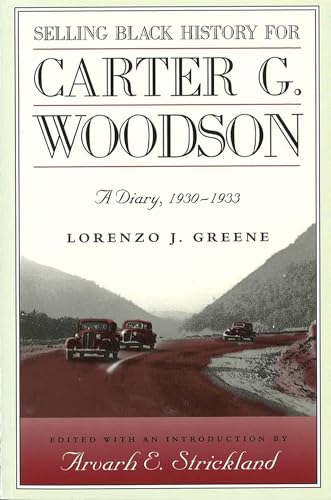


Selling Black History for Carter G. Woodson: A Diary, 1930-1933 (Volume 1)
No reviews yet.
In the summer of 1930, Lorenzo Johnston Greene, a graduate of Howard University and a doctoral candidate at Columbia University, became a book agent for the man with the undisputed title of "Father of Negro History," Carter G. Woodson. With little more than determination, Greene, along with four Howard University students, traveled throughout the South and Southeast selling books published by Woodson's Associated Publishers. Their dual purpose was to provide needed funds for the Association for the Study of Negro Life and History and to promote the study of African American history. Greene returned east by way of Chicago, and, for a time, he settled in Philadelphia, selling books there and in the nearby cities of Delaware and New Jersey. He left Philadelphia in 1931 to conduct a survey in Washington, D.C., of firms employing and not employing black workers.
From 1930 until 1933, when Greene began teaching at Lincoln University in Jefferson City, Missouri, Selling Black History for Carter G. Woodson provides a unique firsthand account of conditions in African American communities during the Great Depression. Greene describes in the diary, often in lyrical terms, the places and people he visited. He provides poignant descriptions of what was happening to black professional and business people, plus working-class people, along with details of high school facilities, churches, black business enterprises, housing, and general conditions in communities. Greene also gives revealing accounts of how the black colleges were faring in 1930.
Selling Black History for Carter G. Woodson offers important glimpses into the private thoughts of a young man of the 1930s, a developing intellectual and scholar. Greene's diary also provides invaluable insights into the personality of Carter Woodson that are not otherwise available. This fascinating and comprehensive view of black America during the early thirties will be a welcome addition to African American studies.