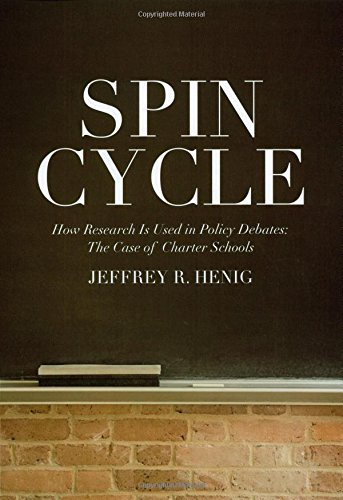


Spin Cycle: How Research Gets Used in Policy Debates--The Case of Charter Schools
Book Details
Description
In Spin Cycle, Henig draws on extensive interviews with researchers, journalists, and funding agencies on both sides of the debate, as well as data on federal and foundation grants and a close analysis of media coverage, to explore how social science research is "spun" in the public sphere. Henig looks at the consequences of a highly controversial New York Times article that cited evidence of poor test performance among charter school students. The front-page story, based on research findings released by the American Federation of Teachers (AFT), sparked an explosive debate over the effectiveness of charter schools. In the ensuing drama, reputable scholars from both ends of the political spectrum launched charges and counter-charges over the research methodology and the implications of the data. Henig uses this political tug-of-war to illustrate broader problems relating to social science: of what relevance is supposedly non-partisan research when findings are wielded as political weapons on both sides of the debate?
In the case of charter schools, Henig shows that despite the political posturing in public forums, many researchers have since revised their stances according to accumulating new evidence and have begun to find common ground. Over time, those who favored charter schools were willing to admit that in many instances charter schools are no better than traditional schools. And many who were initially alarmed by the potentially destructive consequences of school choice admitted that their fears were overblown. The core problem, Henig concludes, has less to do with research itself than with the way it is often sensationalized or misrepresented in public discourse.
Despite considerable frustration over the politicization of research, until now there has been no systematic analysis of the problem. Spin Cycle provides an engaging narrative and instructive guide with far-reaching implications for the way research is presented to the public. Ultimately, Henig argues, we can do a better job of bringing research to bear on the task of social betterment.
More Books in Business & Economics


