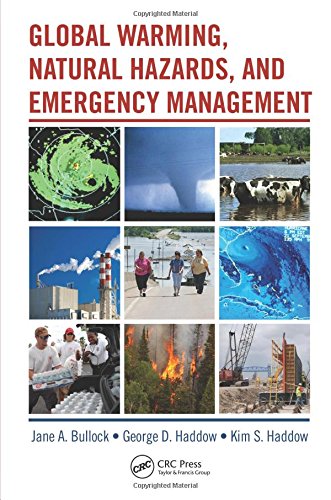
Global Warming, Natural Hazards, and Emergency Management Buy on Amazon

https://www.ebooknetworking.net/books_detail-1420081829.html

Global Warming, Natural Hazards, and Emergency Management

PublisherRoutledge
58.34 86.95 USD
Buy New on Amazon 🇺🇸 Buy Used — $20.91

Usually ships in 24 hours

Book Details

PublisherRoutledge
ISBN / ASIN1420081829
ISBN-139781420081824
AvailabilityUsually ships in 24 hours
Sales Rank1,431,659
MarketplaceUnited States  🇺🇸

Description

Scientists predict the earth is facing 40-to-60 years of climate change, even if emissions of carbon dioxide and other global warming gases stopped today. One inevitable consequence of the greenhouse gases already in the atmosphere will be an increase in the frequency and severity of natural disaster events. Global Warming, Natural Hazards, and Emergency Management documents the imperative need for communities to prepare for the coming effects of climate change and provides a series of in-depth, road-tested recommendations on how to reduce risks for communities and businesses.

Frontline Advice for Increasing Defenses and Reducing Impacts of Global Warming

Authored and edited by emergency management and environmental protection professionals from the Federal Emergency Management Agency (FEMA) and the Sierra Club, this book offers case histories from communities across America that have successfully reduced the extent and consequences of natural disasters. These examples are becoming increasingly important to understand and replicate as the risks to communities created by a changing climate rise.

This book recognizes three fundamental principles essential to developing a disaster-prevention strategy:

  • The protection of natural systems is an important security measure
  • The reduction of disaster risk, not just response, is of great importance
  • Local communities must take the lead in prevention efforts

Provides Local Governments with Replicable Case Histories of Hazard Mitigation Efforts

This no-nonsense reference is a procedural roadmap for emergency managers, policy makers, and community officials. It explains how to develop community partnerships among a myriad of stakeholders; identifies staffing and resource requirements for successful programs; and provides a step-by-step demonstration of the disaster-planning process at the community level.

More Books in Social Science

Donate to EbookNetworking
X vs. Y: A Culture ...Prev
The Extinction of B...Next
