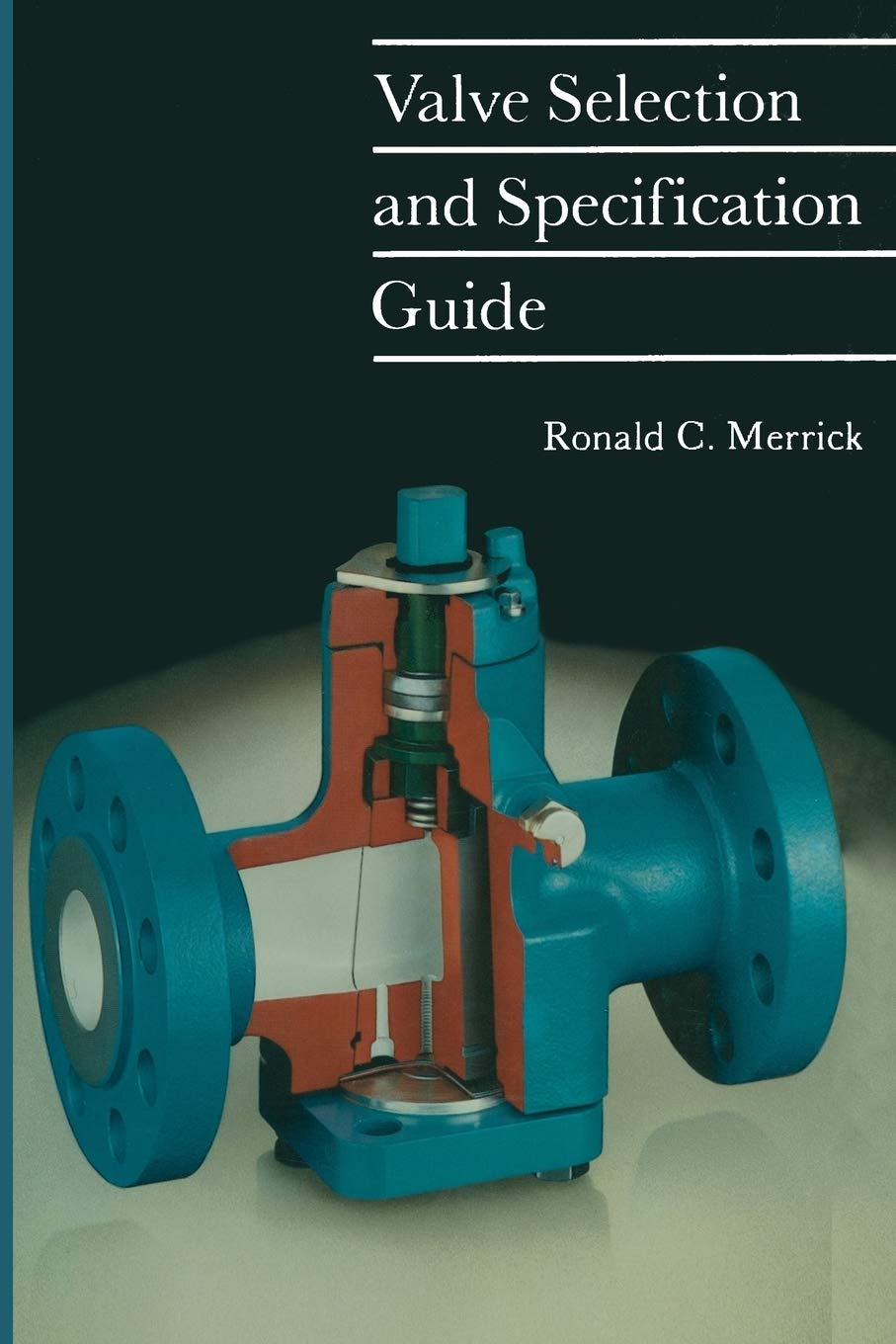


Valve Selection and Specification Guide
109.99
USD
Book Details
Author(s)
R. Merrick,
Publisher
Springer
ISBN / ASIN
1468466704
ISBN-13
9781468466706
Sales Rank
#7,845,111
Category
Science
Marketplace
United States 🇺🇸
Ratings & Reviews
No reviews yet — be the first!
No reviews yet.
Description
Today, people who specify or select valves spend over two-thirds of their time researching literature for information on valve sizing, availability, materials, and standards. This is nonproductive time. Unfortunately, most companies do not have the luxury of a team of experts with the necessary experience and education in all of the different fields that apply to valves. The next best alternative is to understand what valves are and all the things they can do. By definition, valves are devices that stop, start, mix, or change the direction and/or magnitude of the fluid flow, pressure, or its tempera ture. As a specifier or selector you will have to determine whether the valve is going to be used for flow control, throttling, or for on-off service. Then you will have to determine the cycle life or frequency of their operation. You will discover that valves are classified into three categories: on-off valves, control or regulator valves, and fixed valves such as orifice plate, nozzle, duckbill, rupture disk, blind valve, etc. These valves represent approximately thirty different design configurations. It has been said that if cost and delivery were no problem, anyone of the seven basic valve styles could do the job of any other one. But cost and delivery are very important factors in the real world. So you have to be able to distinguish among these seven styles: ball, butterfly, gate, globe, pinch/ diaphragm, plug, and poppet valves.


