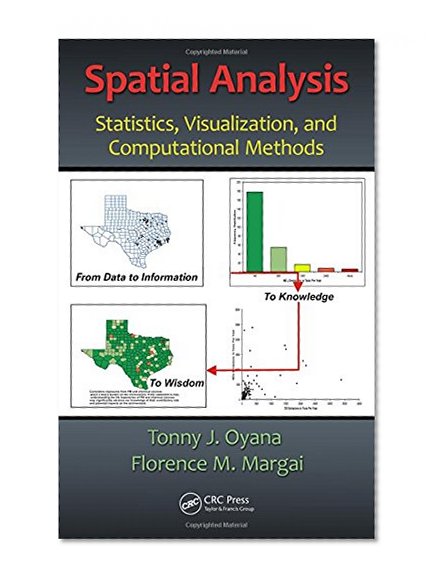


Spatial Analysis: Statistics, Visualization, and Computational Methods
No reviews yet.
An introductory text for the next generation of geospatial analysts and data scientists, Spatial Analysis: Statistics, Visualization, and Computational Methods focuses on the fundamentals of spatial analysis using traditional, contemporary, and computational methods. Outlining both non-spatial and spatial statistical concepts, the authors present practical applications of geospatial data tools, techniques, and strategies in geographic studies. They offer a problem-based learning (PBL) approach to spatial analysis containing hands-on problem-sets that can be worked out in MS Excel or ArcGIS as well as detailed illustrations and numerous case studies.
The book enables readers to:
- Identify types and characterize non-spatial and spatial data
- Demonstrate their competence to explore, visualize, summarize, analyze, optimize, and clearly present statistical data and results
- Construct testable hypotheses that require inferential statistical analysis
- Process spatial data, extract explanatory variables, conduct statistical tests, and explain results
- Understand and interpret spatial data summaries and statistical tests
Spatial Analysis: Statistics, Visualization, and Computational Methods incorporates traditional statistical methods, spatial statistics, visualization, and computational methods and algorithms to provide a concept-based problem-solving learning approach to mastering practical spatial analysis. Topics covered include: spatial descriptive methods, hypothesis testing, spatial regression, hot spot analysis, geostatistics, spatial modeling, and data science.
