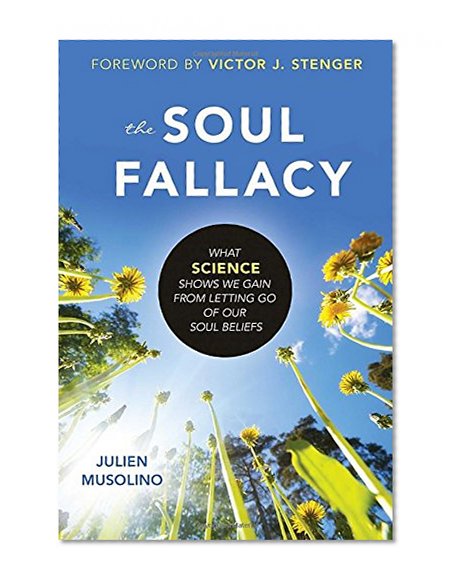


The Soul Fallacy: What Science Shows We Gain from Letting Go of Our Soul Beliefs
Book Details
Author(s)
Julien Musolino
Publisher
Prometheus Books
ISBN / ASIN
1616149620
ISBN-13
9781616149628
Availability
Usually ships in 24 hours
Sales Rank
#198,375
Category
Psychology
Marketplace
United States 🇺🇸
Description
Most Americans believe they possess an immaterial soul that will survive the death of the body. In sharp contrast, the current scientific consensus rejects the traditional soul, although this conclusion is rarely discussed publicly. In this book, a cognitive scientist breaks the taboo and explains why modern science leads to this controversial conclusion. In doing so, the book reveals the truly astonishing scope and power of scientific inquiry, drawing on ideas from biology, psychology, neuroscience, philosophy, and the physical sciences.
Much more than chronicling the demise of the traditional soul, the book explores where soul beliefs come from, why they are so widespread culturally and historically, how cognitive science offers a naturalistic alternative to religious conceptions of mind, and how postulating the existence of a soul amounts to making a scientific claim.
Although the new scientific view of personhood departs radically from traditional religious conceptions, the author shows that a coherent, meaningful, and sensitive appreciation of what it means to be human remains intact. He argues that we do not lose anything by letting go of our soul beliefs and that we even have something to gain.
Throughout, the book takes a passionate stand for science and reason. It also offers a timely rejoinder to recent claims that science supports the existence of the soul and the afterlife.
Much more than chronicling the demise of the traditional soul, the book explores where soul beliefs come from, why they are so widespread culturally and historically, how cognitive science offers a naturalistic alternative to religious conceptions of mind, and how postulating the existence of a soul amounts to making a scientific claim.
Although the new scientific view of personhood departs radically from traditional religious conceptions, the author shows that a coherent, meaningful, and sensitive appreciation of what it means to be human remains intact. He argues that we do not lose anything by letting go of our soul beliefs and that we even have something to gain.
Throughout, the book takes a passionate stand for science and reason. It also offers a timely rejoinder to recent claims that science supports the existence of the soul and the afterlife.




