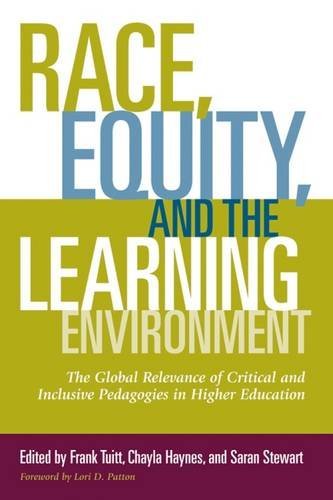


Race, Equity, and the Learning Environment: The Global Relevance of Critical and Inclusive Pedagogies in Higher Education
Book Details
Publisher
Stylus Publishing
ISBN / ASIN
1620363402
ISBN-13
9781620363409
Availability
Usually ships in 24 hours
Sales Rank
#825,026
Marketplace
United States 🇺🇸
Ratings & Reviews
No reviews yet — be the first!
No reviews yet.
Description
At a time of impending demographic shifts, faculty and administrators in higher education around the world are becoming aware of the need to address the systemic practices and barriers that contribute to inequitable educational outcomes of racially and ethnically diverse students.
Focusing on the higher education learning environment, this volume illuminates the global relevance of critical and inclusive pedagogies (CIP), and demonstrates how their application can transform the teaching and learning process and promote more equitable educational outcomes among all students, but especially racially minoritized students.
The examples in this book illustrate the importance of recognizing the detrimental impact of dominant ideologies, of evaluating who is being included in and excluded from the learning process, and paying attention to when teaching fails to consider students’ varying social, psychological, physical and/or emotional needs.
This edited volume brings CIP into the realm of comparative education by gathering scholars from across academic disciplines and countries to explore how these pedagogies not only promote deep learning among students, but also better equip instructors to attend to the needs of diverse students by prioritizing their intellectual and social development; creating identity affirming learning environments that foster high expectations; recognizing the value of the cultural and national differences that learners bring to the educational experience; and engaging the “whole” student in the teaching and learning process.
Focusing on the higher education learning environment, this volume illuminates the global relevance of critical and inclusive pedagogies (CIP), and demonstrates how their application can transform the teaching and learning process and promote more equitable educational outcomes among all students, but especially racially minoritized students.
The examples in this book illustrate the importance of recognizing the detrimental impact of dominant ideologies, of evaluating who is being included in and excluded from the learning process, and paying attention to when teaching fails to consider students’ varying social, psychological, physical and/or emotional needs.
This edited volume brings CIP into the realm of comparative education by gathering scholars from across academic disciplines and countries to explore how these pedagogies not only promote deep learning among students, but also better equip instructors to attend to the needs of diverse students by prioritizing their intellectual and social development; creating identity affirming learning environments that foster high expectations; recognizing the value of the cultural and national differences that learners bring to the educational experience; and engaging the “whole” student in the teaching and learning process.
Similar Products
