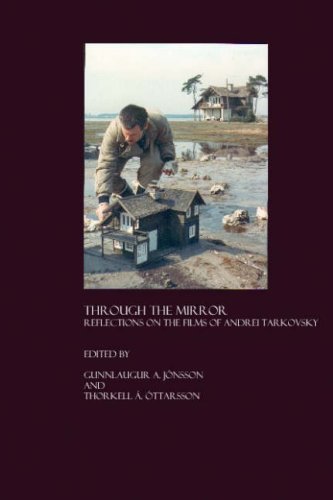


Through the Mirror: Reflections on the Films of Andrei Tarkovsky
Book Details
Author(s)
Gunnlaugur A. Jonsson
Publisher
Cambridge Scholars Publishing
ISBN / ASIN
1904303110
ISBN-13
9781904303114
Availability
Usually ships in 24 hours
Sales Rank
#5,199,973
Category
Performing Arts
Marketplace
United States 🇺🇸
Ratings & Reviews
No reviews yet — be the first!
No reviews yet.
Description
The authors of this book are from various countries and have diverse educational backgrounds but they are united by one common thing; their love of Andrei Tarkovsky's films. Tarkovsky is one of the greatest film directors of all time and the most famous Soviet film maker since Eisenstein. He died of lung cancer in Paris 28th December 1986, only 54 years of age. This year, 2006, therefore marks the 20th anniversary of his passing. This is most likely the broadest volume on Tarkovsky, spanning everything from classical film theories to theological analyses, via sociology and the history of the ANS synthesizer. It is divided into two parts. The first part is called Film theories and, as the name suggests, contains papers that touch more or less on film theories. Benjamin Halligan and Terence McSweeney write about Tarkovsky's aesthetic strategies and film theory. Sean Martin writes about the autobiography in Tarkovsky's films, David Beer about the music in "Solaris", Oddny Sen analyzes dream-symbolism in the films with an emphasis on Ivan's Childhood and Paul Johnson looks at Tarkovsky's films from a sociological perspective. The second part of the book concentrates on theological themes in Tarkovsky's films. This kind of approach has been seriously neglected by most books and papers written about his films until now. Two of the papers in this part are general in nature. Torsten Kalvemark writes about the philosophical and theological understanding of Andrei Tarkovsky's work and Astrid Soderbergh Widding analyzes what's between the visible and invisible in the films of Tarkovsky. The remaining five papers concentrate on specific films, namely, 'Ivan's Childhood', 'Andrei Rublev', 'Stalker', 'Nostalgia' and 'The Sacrifice'. Tarkovsky frequently invited the audience to interpret his films as they saw fit. The authors of the papers in this book have all accepted Tarkovsky's invitation.