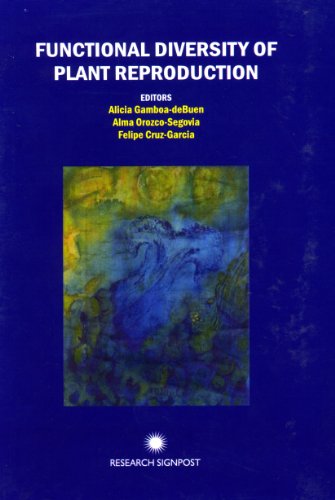


Functional Diversity of Plant Reproduction
Book Details
Publisher
Research Signpost
ISBN / ASIN
8130803607
ISBN-13
9788130803609
Availability
Usually ships in 24 hours
Sales Rank
#99,999,999
Marketplace
United States 🇺🇸
Ratings & Reviews
No reviews yet — be the first!
No reviews yet.
Description
The nowadays deforestation rates requires urgent intervention of plant biologist to complete the inventory of plants and understand the morpho-functional diversity contained in them from ecosystems to molecular scales, to maintain the undisturbed plant communities and to restore the plant cover of deteriorated areas. The dynamic of ecosystems and their restoration is based on plant reproduction, in which there is a wide diversity from pollination to seed and seedling. Then, in order to understand the functional diversity of plant reproduction at different organization levels, this book describes several aspects of plant reproduction with different approaches. In the first chapter, a comparative approach of the characters and processes involved in sexual reproduction of gymnosperms is described. Key genes involved in development and organ differentiation of reproductive structures, homologous to angiosperm genes, are also described. The second chapter is related to sexual reproduction of seagrasses, an ecological group of angiosperms confined to the marine environment. Modification of the seagrasses life-cycle has important adaptation to have a successful reproduction in their environment. The third chapter revises the genetic control of flower unisexuality. The presence of one functional reproductive organ (androecium or gynoecium) has been evolved in approximately 10% of unisexual angiosperms. The fourth chapter discusses the advances and current models of three different self-incompatibility (SI) mechanisms. SI is a system present in many angiosperms that allows the pistil to reject self-pollen and accept non-self one favouring outcross and avoiding inbreeding. Evidences about the nitrogen (N) regulation of developmental processes including flowering and seed germination are discussed in chapter 5; meanwhile, chapter 6 emphasize the important role of cell wall composition changes during reproduction processes such as pollen maturation, anther dehiscence and seed germination. There are important changes in cell wall composition that are involved in cell expansion and reserve deposition during seed development. Chapter 7 discusses the biochemical and morphological changes that occur in seed reserves during development, with special emphasis in the development of Ipomoea seeds. The reserve accumulation in seeds is determining seedling vigor and subsequent establishment, which is discussed in the following chapter. The seed functional diversity as the consequence of the interaction of the parents and of the seeds themselves with their environment is present in Chapter 8. Finally, a description of the general aspects including a molecular approach of the clonal growth habit that characterize a large proportion of higher plants is presented in Chapter 9; the ecological advantages of sexual and clonal reproduction are also discussed in this chapter. We hope to fulfill our expectative to show different aspects and approaches of plant reproduction. From different integration scales, we pretended to give a comprehensible panorama of diversity in plant reproduction, which may help to cope, at mediate and long term, the problems generated by deforestation and the consequent climatic global change.
