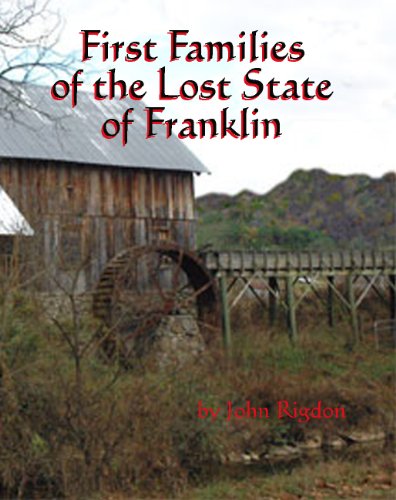


First Families of the Lost State of Franklin (The First Families Project Book 5)
Book Details
Author(s)
John Rigdon
Publisher
Eastern Digital Resources
ISBN / ASIN
B005INYUNW
ISBN-13
978B005INYUN7
Sales Rank
#676,202
Marketplace
United States 🇺🇸
Ratings & Reviews
No reviews yet — be the first!
No reviews yet.
Description
By the year 1770, some 70 families had settled in the area bounded by the Watauga, Nolichucky, and Holston river valleys. Most migrated from Virginia via the Great Valley, although a few were believed to have been Regulators fleeing North Carolina after their defeat at the Battle of Alamance.
In May 1772, the Watauga and Nolichucky settlers negotiated a 10-year lease with the Cherokee Indians, and being outside the claims of any colony, established the Watauga Association to provide basic government functions. President Theodore Roosevelt wrote that the Watauga settlers were the "first men of American birth to establish a free and independent community on the continent."
Modern Counties in Tennessee which made up the State of Franklin:
Blount County
Carter County
Cocke County
Greene County
Hamblen County
Hawkins County
Jefferson County
Johnson County
Sevier County
Sullivan County
Unicoi County
Washington County
A convention of delegates (except for Davidson County that sent none) met on August 23, 1784 and after intense debate they declared these western counties independent of North Carolina on a unanimous vote. Several names were offered for the new state. The name Frankland was proposed since it was translatable as "the Land of the Free," however, Franklin was decided upon perhaps for gaining the favor of Benjamin Franklin. North Carolina regained control of the region in 1788 thus ending the existance of the State of Franklin.
The extant records for the State of Franklin generally reference the entire region which now covers the 12 counties of East Tennessee. This book focuses on the earliest known families in the area.
Alexander, Oliver
Atchley, Thomas
Baker, Henry B.
Blair, Hugh
Blair, Samuel
Bohanon, Henry E., Sr.
Brimer, William
Bryant, Peter
Cannon, James
Cannon, William
Catlett, Benjamin
Catlett, John
Catlett, Richard
Clabaugh, William
Clack, Spencer
Compton, Jeremiah II
Cook, John
Creswell, Andrew
Creswell, Samuel
Davies, Zachariah
Emert, Frederick
Galyon, Gilbert
Gist, Joshua
Headrick, William
Henderson, Samuel
Henderson, William, Sr.
Henry, Hugh
Henry, William
Hodges, Henry George
Hudson, George
Huff, Jacob
Huff, William
Jenkins, James
Kinder, William
Large, Joseph
Layman, Jacob
Lyman, James
Marshall, John
McCarter, James, Sr.
McCroskey, John
McCroskey, Robert
McMahan, James
Newell, Samuel
Nichols, Flayle
Parsons, George
Pitner, John
Porter, George W.
Porter, John
Porter, Mitchell
Preston, Alexander
Reagan, Timothy
Richardson, William
Robertson, William
Rogers, Henry
Rogers, M. C.
Rudd, Burlington
Runyan, Barefoot
Sharp, John
Shields, Robert
Shults, Martin
Smith, Thomas
Thomas, Isaac
Trotter, William
Walker, John, Sr.
Wear, John
Wear, Samuel
Wells, Andrew
Whaley, William M.
Wood, Richard
In May 1772, the Watauga and Nolichucky settlers negotiated a 10-year lease with the Cherokee Indians, and being outside the claims of any colony, established the Watauga Association to provide basic government functions. President Theodore Roosevelt wrote that the Watauga settlers were the "first men of American birth to establish a free and independent community on the continent."
Modern Counties in Tennessee which made up the State of Franklin:
Blount County
Carter County
Cocke County
Greene County
Hamblen County
Hawkins County
Jefferson County
Johnson County
Sevier County
Sullivan County
Unicoi County
Washington County
A convention of delegates (except for Davidson County that sent none) met on August 23, 1784 and after intense debate they declared these western counties independent of North Carolina on a unanimous vote. Several names were offered for the new state. The name Frankland was proposed since it was translatable as "the Land of the Free," however, Franklin was decided upon perhaps for gaining the favor of Benjamin Franklin. North Carolina regained control of the region in 1788 thus ending the existance of the State of Franklin.
The extant records for the State of Franklin generally reference the entire region which now covers the 12 counties of East Tennessee. This book focuses on the earliest known families in the area.
Alexander, Oliver
Atchley, Thomas
Baker, Henry B.
Blair, Hugh
Blair, Samuel
Bohanon, Henry E., Sr.
Brimer, William
Bryant, Peter
Cannon, James
Cannon, William
Catlett, Benjamin
Catlett, John
Catlett, Richard
Clabaugh, William
Clack, Spencer
Compton, Jeremiah II
Cook, John
Creswell, Andrew
Creswell, Samuel
Davies, Zachariah
Emert, Frederick
Galyon, Gilbert
Gist, Joshua
Headrick, William
Henderson, Samuel
Henderson, William, Sr.
Henry, Hugh
Henry, William
Hodges, Henry George
Hudson, George
Huff, Jacob
Huff, William
Jenkins, James
Kinder, William
Large, Joseph
Layman, Jacob
Lyman, James
Marshall, John
McCarter, James, Sr.
McCroskey, John
McCroskey, Robert
McMahan, James
Newell, Samuel
Nichols, Flayle
Parsons, George
Pitner, John
Porter, George W.
Porter, John
Porter, Mitchell
Preston, Alexander
Reagan, Timothy
Richardson, William
Robertson, William
Rogers, Henry
Rogers, M. C.
Rudd, Burlington
Runyan, Barefoot
Sharp, John
Shields, Robert
Shults, Martin
Smith, Thomas
Thomas, Isaac
Trotter, William
Walker, John, Sr.
Wear, John
Wear, Samuel
Wells, Andrew
Whaley, William M.
Wood, Richard

