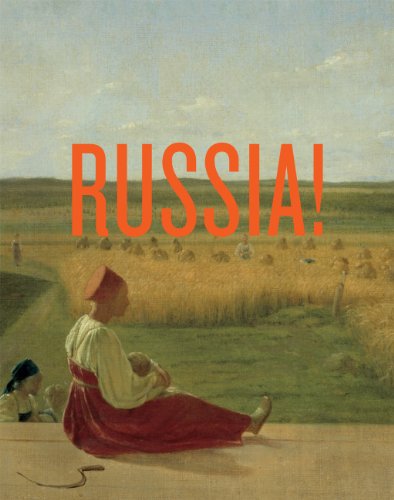


The Icon in the Life and History of the Russian People (Russia!)
Book Details
Author(s)
Gerold Vzdornov
Publisher
Guggenheim Museum
ISBN / ASIN
B007TL27HM
ISBN-13
978B007TL27H2
Sales Rank
#1,194,871
Marketplace
United States 🇺🇸
Description
The Russian icon, an object belonging to both religion and philosophy, archeology and the scripture, has come to symbolize the harmonious blend of both contemporary Russian and ancient Rus culture. Gerold Vzdornov analyzes the artistic value of the icon, dissecting the formal components (such as color, line, and composition), as well as reoccurring thematic content.
Excerpt
The Russian icon, as a church object of religious worship, deals with many of the same subjects as Western European religious compositions, such as Italian or German altar paintings of the Middle Ages. Obviously, there is a genetic resemblance between Russian icons and works produced by Byzantine artists, since both of these Christian civilizations have the same roots. However, unlike Greek icons, Russian painting developed such individual characteristics over the centuries that it cannot be viewed merely as an appendix to Byzantine art. It is a different artistic phenomenon altogether. Moreover, after the fall of the Byzantine Empire in 1453, Russian icons came to embody the Orthodox Christian art of all of Eastern Europe and spread to other countries and geographical locations: to Greece and Mount Athos, to Bulgaria and Serbia, to Romania and Hungary.
Excerpt
The Russian icon, as a church object of religious worship, deals with many of the same subjects as Western European religious compositions, such as Italian or German altar paintings of the Middle Ages. Obviously, there is a genetic resemblance between Russian icons and works produced by Byzantine artists, since both of these Christian civilizations have the same roots. However, unlike Greek icons, Russian painting developed such individual characteristics over the centuries that it cannot be viewed merely as an appendix to Byzantine art. It is a different artistic phenomenon altogether. Moreover, after the fall of the Byzantine Empire in 1453, Russian icons came to embody the Orthodox Christian art of all of Eastern Europe and spread to other countries and geographical locations: to Greece and Mount Athos, to Bulgaria and Serbia, to Romania and Hungary.
