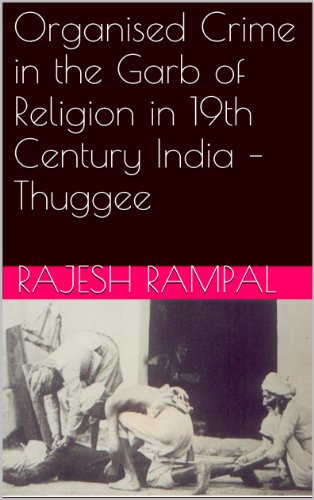


Organised Crime in the Garb of Religion in 19th Century India - Thuggee (Essays on 19th Century India Book 4)
Book Details
Author(s)
Rajesh Rampal
Publisher
Rajesh Rampal
ISBN / ASIN
B00EY3P1LM
ISBN-13
978B00EY3P1L8
Sales Rank
#2,867,315
Marketplace
United States 🇺🇸
Description
Even crime and punishment are susceptible to economic analysis. Does crime pay? If
there were no police and courts and never any punishments or deterrents to crime
more people would find themselves rewarded by illegal activities. On the other hand,
if strong locks are employed, private and public guards employed who maintain a
vigilant watch, if apprehension is likely, if trial is swift and the jury and the judge can
be presumed to be quite accurate in distinguishing between the truly guilty and the
innocent, that part of crime which is undertaken in the rational hope of reward may
be reduced in total amount.1
Prof. Paul A. Samuelson
Professor of Economics MIT
Nobel Laureate Economics 1970
Suppression of Thuggee must be the most outstanding contribution to India of the British
Rule. Major General Sir William Henry Sleeman, a most distinguished servant of the state
is credited with the suppression of Thuggee by his almost superhuman endeavors.
Sir William Horwood G.B.E., K.C. B., D.S.O.
Commissioner of the London Metropolitan Police (1920-28)
The Thug menace has been best described by Late K. F. Rustomji as:
'More than a hundred Thug gangs prowled India's highways and annually killed about
40,000 travellers in the early 19th century. The Thugs were held together by a
perversion of religion that made killing a part of worship. The gangs were knit
together by a strange and bizarre regimen of life that destroyed their victims with a
combination of guile and cruelty almost unparalleled in the history of crime anywhere
in the world. The Thugs had been plying their trade undetected for nearly 500 years'. 2
1 Paul Samuelson. Economics. McGraw Hill. Eleventh Edition 1980 The Quality of Life. Page 753.
2 K. F. Rustomji, Indian Police Service. Centenary issue of the 'Indian Police Journal', 1962 article
titled 'Pindaris, Thugs and Dacoits.'
56 Essays on 19th Century India
The Department for the Suppression of Thuggee was founded on 10th January 1835
with Captain William Henry Sleeman as its General Superintendent and with
headquarters in Jabalpur. It was the first specialized department to be created in the
world to tackle Organised crime and also for rehabilitation of convicts and their
progeny.
Cover Picture: Thugs in Captivity demonstrating their method of Killing -Picvture by Felice Beato 1855 -The Yellow Scarf - Lt general Sir Francis Tuker -J.M. Dent & Sons London
there were no police and courts and never any punishments or deterrents to crime
more people would find themselves rewarded by illegal activities. On the other hand,
if strong locks are employed, private and public guards employed who maintain a
vigilant watch, if apprehension is likely, if trial is swift and the jury and the judge can
be presumed to be quite accurate in distinguishing between the truly guilty and the
innocent, that part of crime which is undertaken in the rational hope of reward may
be reduced in total amount.1
Prof. Paul A. Samuelson
Professor of Economics MIT
Nobel Laureate Economics 1970
Suppression of Thuggee must be the most outstanding contribution to India of the British
Rule. Major General Sir William Henry Sleeman, a most distinguished servant of the state
is credited with the suppression of Thuggee by his almost superhuman endeavors.
Sir William Horwood G.B.E., K.C. B., D.S.O.
Commissioner of the London Metropolitan Police (1920-28)
The Thug menace has been best described by Late K. F. Rustomji as:
'More than a hundred Thug gangs prowled India's highways and annually killed about
40,000 travellers in the early 19th century. The Thugs were held together by a
perversion of religion that made killing a part of worship. The gangs were knit
together by a strange and bizarre regimen of life that destroyed their victims with a
combination of guile and cruelty almost unparalleled in the history of crime anywhere
in the world. The Thugs had been plying their trade undetected for nearly 500 years'. 2
1 Paul Samuelson. Economics. McGraw Hill. Eleventh Edition 1980 The Quality of Life. Page 753.
2 K. F. Rustomji, Indian Police Service. Centenary issue of the 'Indian Police Journal', 1962 article
titled 'Pindaris, Thugs and Dacoits.'
56 Essays on 19th Century India
The Department for the Suppression of Thuggee was founded on 10th January 1835
with Captain William Henry Sleeman as its General Superintendent and with
headquarters in Jabalpur. It was the first specialized department to be created in the
world to tackle Organised crime and also for rehabilitation of convicts and their
progeny.
Cover Picture: Thugs in Captivity demonstrating their method of Killing -Picvture by Felice Beato 1855 -The Yellow Scarf - Lt general Sir Francis Tuker -J.M. Dent & Sons London

