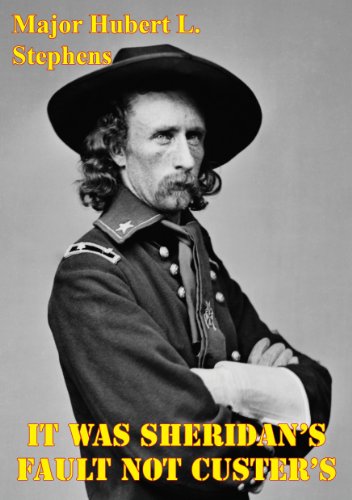


It was Sheridan's fault not Custer's: LTG Sheridan's Campaign Plans Against The Plain Indians And The Ties To Current Planning
Book Details
Author(s)
Major Hubert L. Stephens
Publisher
Pickle Partners Publishing
ISBN / ASIN
B00IIRL8A8
ISBN-13
978B00IIRL8A4
Sales Rank
#1,229,374
Marketplace
United States 🇺🇸
Description
Martin van Creveld, a noted theorist, contends that the concept of operational art did not take off in the United States (US) until after the Vietnam War. Conversely, James Schneider, a prominent military theorist, asserts that operational art began in the American Civil War. This monograph provides a holistic analysis of four Plains Indian War Campaigns. Lieutenant General (LTG) Philip Sheridan conducted all four campaigns. This analysis illustrates several enduring principles of both operational art and counterinsurgency (COIN) operations. The purpose of the monograph is to explain the initial failure of LTG Sheridan’s 1876 Centennial Campaign against the Sioux and Cheyenne Indians. Additionally, this explanation relates the significance of LTG Sheridan’s planning to contemporary COIN campaign planning. The overall methodology is the incorporation of four case studies to test the theory of sanctuary control and elimination of resources to defeat insurgencies.
The four case studies include: the 1868-1869 Cheyenne War, the 1874-1875 Red River War, the 1876 Centennial Campaign, and the 1876-1877 Sioux Campaign. The case studies use three essential structural variables or frameworks. The first framework evaluates the strategic context to deduce the strategic aims and operational objectives. This provides the ends that the Army or tribe attempted to achieve. The second structural analysis uses the elements of operational art described to assess the campaigns. The third aspect of the case study evaluates tenets of current US Army COIN principles.
The monograph contains three key findings. The first key finding is that the failure at the Little Big Horn was LTG Sheridan’s fault not LTC Custer’s, and this directly relates to the second finding. The second key finding is the importance of operational art in designing a campaign plan to link tactical actions to strategic objectives. The third finding is the efficacy of some of the current COIN tenets. The doctrinal analysis of the four campaigns, using the elements of operational art, illustrates the importance of three elements of operational art to the success of LTG Sheridan’s campaigns. The three prevailing elements in at least three of the four campaigns are: operational reach, tempo, and simultaneity and depth. When each of the three elements was interdependent and when the approach was designed correctly, LTG Sheridan had success. The four common successful COIN characteristics are: understanding the environment, intelligence driven operations, isolation of insurgents from their cause and support, and establishing control of the operational area to secure the population. Ultimately, this monograph demonstrates the utility of a strategy of exhaustion and its resulting operations to control terrain and insurgent sanctuaries as well as to deny the enemy resources to defeat an insurgency.
The four case studies include: the 1868-1869 Cheyenne War, the 1874-1875 Red River War, the 1876 Centennial Campaign, and the 1876-1877 Sioux Campaign. The case studies use three essential structural variables or frameworks. The first framework evaluates the strategic context to deduce the strategic aims and operational objectives. This provides the ends that the Army or tribe attempted to achieve. The second structural analysis uses the elements of operational art described to assess the campaigns. The third aspect of the case study evaluates tenets of current US Army COIN principles.
The monograph contains three key findings. The first key finding is that the failure at the Little Big Horn was LTG Sheridan’s fault not LTC Custer’s, and this directly relates to the second finding. The second key finding is the importance of operational art in designing a campaign plan to link tactical actions to strategic objectives. The third finding is the efficacy of some of the current COIN tenets. The doctrinal analysis of the four campaigns, using the elements of operational art, illustrates the importance of three elements of operational art to the success of LTG Sheridan’s campaigns. The three prevailing elements in at least three of the four campaigns are: operational reach, tempo, and simultaneity and depth. When each of the three elements was interdependent and when the approach was designed correctly, LTG Sheridan had success. The four common successful COIN characteristics are: understanding the environment, intelligence driven operations, isolation of insurgents from their cause and support, and establishing control of the operational area to secure the population. Ultimately, this monograph demonstrates the utility of a strategy of exhaustion and its resulting operations to control terrain and insurgent sanctuaries as well as to deny the enemy resources to defeat an insurgency.
