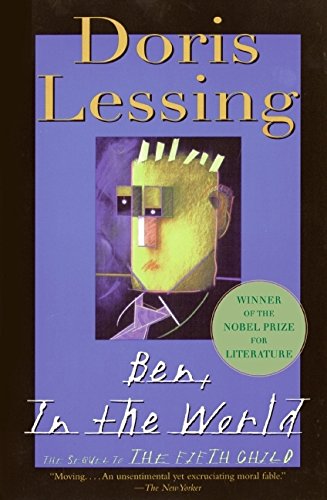
She takes them up again, however, in Ben, in the World. Now 18, but looking 35, Ben is estranged from his family, forced to find his way in a basically hostile world. His yeti-like appearance invariably evokes fear or amusement. And his other habits (including an appetite for raw meat) hardly allow him to blend into the crowd:
He would catch and eat little animals, or a bird.... Or he stood by the cow with his arm around her neck, nuzzling his face into her; and the warmth that came into him from her, and the hot sweet blasts of her breath on his arms and legs when she turned her head to sniff at him meant the safety of kindness. Or he stood leaning on a fence post staring up at the night sky, and on clear nights he sang a little grunting song to the stars, or he danced around, lifting his feet and stamping.After three fictional encounters, Lessing knows Ben well. She constantly intervenes to direct the reader's response to him, to the people who surround him, and to his (sometimes unlikely) experiences in Europe and South America. His misery and alienation remain the focus of the novel. Yet they are offset by the odd individuals who offer Ben their friendship--and finally, by his wayward quest to find people like himself. --Vicky Lebeau