Winner, Library of Virginia Literary Award for Nonfiction
Winner, Eugene Feit Award in Civil War Studies, New York Military Affairs Symposium
Winner of the Dan and Marilyn Laney Prize of the Austin Civil War Round Table
Finalist, Jefferson Davis Award of the Museum of the Confederacy
Best Books of 2014, Civil War Monitor
6 Civil War Books to Read Now, Diane Rehm Show, NPR
Lee's surrender to Grant at Appomattox Court House evokes a highly gratifying image in the popular mind -- it was, many believe, a moment that transcended politics, a moment of healing, a moment of patriotism untainted by ideology. But as Elizabeth Varon reveals in this vividly narrated history, this rosy image conceals a seething debate over precisely what the surrender meant and what kind of nation would emerge from war. The combatants in that debate included the iconic Lee and Grant, but they also included a cast of characters previously overlooked, who brought their own understanding of the war's causes, consequences, and meaning.
In Appomattox, Varon deftly captures the events swirling around that well remembered-but not well understood-moment when the Civil War ended. She expertly depicts the final battles in Virginia, when Grant's troops surrounded Lee's half-starved army, the meeting of the generals at the McLean House, and the shocked reaction as news of the surrender spread like an electric charge throughout the nation. But as Varon shows, the ink had hardly dried before both sides launched a bitter debate over the meaning of the war and the nation's future. For Grant, and for most in the North, the Union victory was one of right over wrong, a vindication of free society; for many African Americans, the surrender marked the dawn of freedom itself. Lee, in contrast, believed that the Union victory was one of might over right: the vast impersonal Northern war machine had worn down a valorous and unbowed South. Lee was committed to peace, but committed, too, to the restoration of the South's political power within the Union and the perpetuation of white supremacy. These two competing visions of the war's end paved the way not only for Southern resistance to reconstruction but also our ongoing debates on the Civil War, 150 years later.
Did America's best days lie in the past or in the future? For Lee, it was the past, the era of the founding generation. For Grant, it was the future, represented by Northern moral and material progress. They held, in the end, two opposite views of the direction of the country-and of the meaning of the war that had changed that country forever.
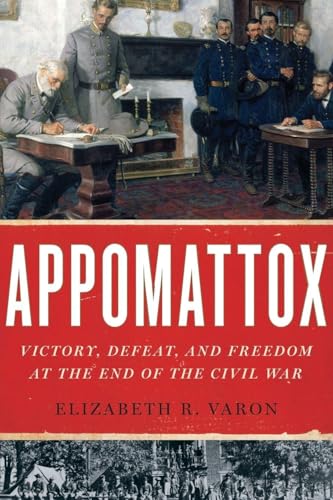
Appomattox: Victory, Defeat, and Freedom at the End of the Civil War
📄 Viewing lite version
Full site ›
Book Details
Author(s)Elizabeth R. Varon
PublisherOxford University Press
ISBN / ASIN0190217863
ISBN-139780190217860
AvailabilityUsually ships in 24 hours
Sales Rank780,736
CategoryPaperback
MarketplaceUnited States 🇺🇸
Description ▲
More Books in Paperback
Nightmare Hour TV Tie-in Edition
View
First Light
View
The Miles Between
View
Prize Stories 1990: The O. Henry Awards (Pen / O. Henr…
View
Democracy Begins Between Two
View
The Model Locomotive Engineer, Fireman, and Engine Boy
View
Bloodline in the Sand
View
Making America, Volume A, Brief, 2nd Ed + Perfect Unio…
View
Ellis, Becoming a Master Student, 11th Edition Plus My…
View