Three-year-old Kwara'ae children in Oceania act as caregivers of their younger siblings, but in the UK, it is an offense to leave a child under age 14 ears without adult supervision. In the Efe community in Zaire, infants routinely use machetes with safety and some skill, although U.S. middle-class adults often do not trust young children with knives. What explains these marked differences in the capabilities of these children?
Until recently, traditional understandings of human development held that a child's development is universal and that children have characteristics and skills that develop independently of cultural processes. Barbara Rogoff argues, however, that human development must be understood as a cultural process, not simply a biological or psychological one. Individuals develop as members of a community, and their development can only be fully understood by examining the practices and circumstances of their communities.
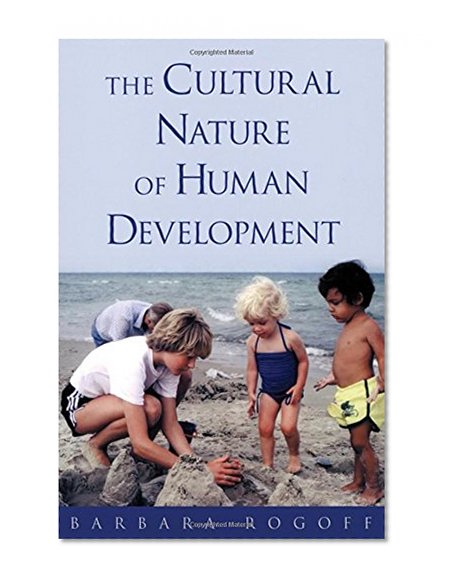
The Cultural Nature of Human Development
📄 Viewing lite version
Full site ›
Book Details
Author(s)Barbara Rogoff
PublisherOxford University Press
ISBN / ASIN0195131339
ISBN-139780195131338
AvailabilityUsually ships in 24 hours
Sales Rank202,201
CategoryFAMILY & RELATIONSHIPS
MarketplaceUnited States 🇺🇸
Description ▲
More Books in FAMILY & RELATIONSHIPS
Interdependency and Care over the Lifecourse (Relation…
View
42 Gifts I'd Like to Give to You: A Guidebook of Wonde…
View
Reading Together: Everything You Need to Know to Raise…
View
The Love Clinic: Use The Real Energy Secrets of Love, …
View
Sleeping Through the Night, Revised Edition: How Infan…
View
Bullying Solutions: Learn to Overcome from Real Case S…
View
Touched by Suicide: Hope and Healing After Loss
View
My House Our House: Living Far Better for Far Less in …
View