In 1663, an indentured servant, Anne Orthwood, was impregnated with twins in a tavern in Northampton County, Virginia. Orthwood died soon after giving birth; one of the twins, Jasper, survived. Orthwood's illegitimate pregnancy sparked four related cases that came before the Northampton magistrates -- who coincidentally held court in the same tavern -- between 1664 and 1686. These interrelated cases and the decisions rendered in them are notable for the ways in which the Virginia colonists modified English common law traditions and began to create their own, as well as what they reveal about cultural and economic values in an Eastern shore community. Through these cases, the very reasons legal systems are created are revealed, namely, the maintenance of social order, the protection of property interests, the protection of personal reputation, and personal liberty. Through Jasper Orthwood's life, the treatment of the poor in small communities is set in sharp relief.
Anne Orthwood's Bastard was the winner of the 2003 Prize in Atlantic History, American Historical Association.
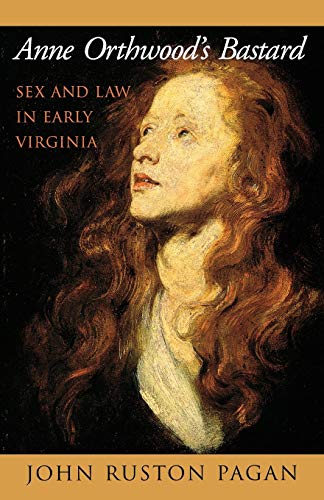
Anne Orthwood's Bastard: Sex and Law in Early Virginia
📄 Viewing lite version
Full site ›
Book Details
Author(s)Pagan, John Ruston
PublisherOxford University Press, USA
ISBN / ASIN0195144791
ISBN-139780195144796
AvailabilityIn Stock.
Sales Rank479,358
MarketplaceUnited States 🇺🇸
Description ▲
Similar Products ▼
- American Legal History: Cases and Materials
- A Legal History of the Civil War and Reconstruction: A Nation of Rights (New Histories of American Law)
- New York Burning: Liberty, Slavery, and Conspiracy in Eighteenth-Century Manhattan
- American Colonies: The Settling of North America, Vol. 1
- The Times and Trials of Anne Hutchinson: Puritans Divided (Landmark Law Cases & American Society)
- New England Bound: Slavery and Colonization in Early America
- Cradle of America: A History of Virginia
- The Fires of Jubilee: Nat Turner's Fierce Rebellion
- Pocahontas and the Powhatan Dilemma: The American Portraits Series
- Witches, Wife Beaters, and Whores: Common Law and Common Folk in Early America