Most studies of the history of the early modern Deccan focus on struggles between the region's primary centers, that is, the great capital cities such as Bijapur, Vijayanagara, or Golconda. This study, by contrast, examines the political histories and material culture of smaller, fortified strongholds both on the plains and atop hills, the control of which was repeatedly contested by rival primary centers. Exceptionally high levels of conflict over such secondary centers occurred between 1300 and 1600, and especially during the turbulent sixteenth century when gunpowder technology had become widespread in the region.
The authors bring two principal objectives to the enquiry. One is to explore how political power, monumental architecture, and collective memory interacted with one another in the period under study. The study's authors-one trained in history, the other in art history and archaeology-argue for systematically integrating the methodologies of history, art history, and archaeology in attempts to reconstruct the past. The study's other aim is to radically rethink the usefulness of Hindu-Muslim relations as the master key by which to interpret this period of South Asian history, and to propose instead a model informed by Sanskrit and the Persian literary traditions.
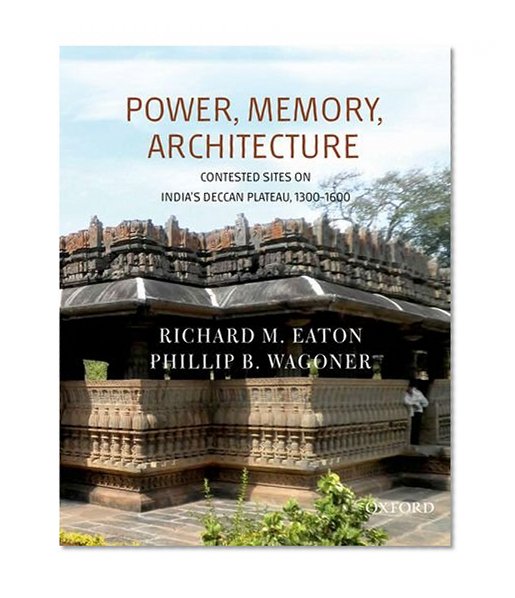
Power, Memory, Architecture: Contested Sites on India's Deccan Plateau, 1300-1600
📄 Viewing lite version
Full site ›
Book Details
Author(s)Richard M. Eaton, Phillip B. Wagoner
PublisherOxford University Press
ISBN / ASIN0198092210
ISBN-139780198092216
AvailabilityUsually ships in 24 hours
Sales Rank1,739,368
CategoryHistory
MarketplaceUnited States 🇺🇸
Description ▲
More Books in History
The Bet, and Other Stories
View
Pakistan and the Bomb: Public Opinion and Nuclear Opti…
View
Writing National Histories: Western Europe Since 1800
View
Empire in Eclipse
View
Monks and Laymen in Byzantium, 843-1118
View
The Wilmington and Western Railroad (Images of Rail: D…
View
Black Sailor, White Navy: Racial Unrest in the Fleet d…
View
Feasibility of Laser Power Transmission to a High-Alti…
View
The Democratic Republic: 1801-1815
View