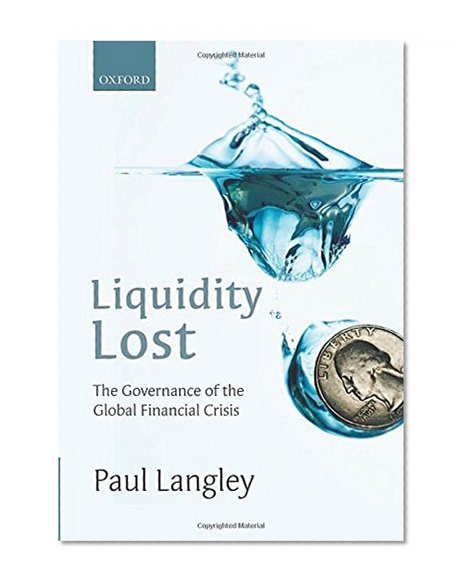
The interventions of crisis management during the 2007 to 2011 financial crisis were not simply responses to a set of given developments in markets, banking or neo-liberal capitalism. Nor can those interventions be adequately explained as the actions of sovereign state officials and institutions. Instead, Langley argues, processes of crisis governance are shown to have established six principal technical problems to be acted upon: liquidity, toxicity, solvency, risk, regulation, and debt and that the governance of these technical problems, is shown to have been strategically assembled in order to secure the continuation of a particular, financialized way of life that depends upon global financial circulations.
Contributing to interdisciplinary debates in cultural economy and the social studies of finance, and grounded in extensive empirical research, this book offers an innovative analysis of how the contemporary global financial crisis was governed. Through an exploration of the interventions made by central banks, treasuries, and regulatory authorities in the Anglo-American heartland of the crisis between 2007 and 2011, experimental and strategic apparatuses of crisis governance are shown to have emerged. These discrete apparatuses established the six technical problems to be acted upon, but also shared certain proclivities and preferences. Crisis governance assembled discourses and devices of economy in relation with sovereign monetary, fiscal, and regulatory techniques, and elicited an affective atmosphere of confidence. It also sought to secure the financialized way of life which turns on the opportunities ostensibly afforded by uncertain financial circulations, and gave rise to post-crisis technical fixes designed to advance the resilience of banking and the macro-prudential regulation of financial stability. Thus, the consensus that prevails across economics, political economy, and beyond - wherein sovereign state institutions are cast as coming to the rescue of the markets, banking, or neo-liberal capitalism - conceals a great deal more than it reveals about the governance of the global financial crisis.
Liquidity Lost: The Governance of the Global Financial Crisis
📄 Viewing lite version
Full site ›
Book Details
Author(s)Paul Langley
PublisherOxford University Press
ISBN / ASIN0199683786
ISBN-139780199683789
AvailabilityIn stock. Usually ships within 2 to 3 days.
Sales Rank1,661,566
CategoryBusiness & Economics
MarketplaceUnited States 🇺🇸
Description ▲
More Books in Business & Economics
The Power of Habit: Why We Do What We Do in Life and B…
View
Building Strong Brands
View
Selling Today: Creating Customer Value, Ninth Edition
View
Marketing leadership in hospitality and tourism : Stra…
View
Keep from All Thoughtful Men: How U.S. Economists Won …
View
Narconomics: How to Run a Drug Cartel
View
The IKEA Edge: Building Global Growth and Social Good …
View
Shark Tank Jump Start Your Business: How to Launch and…
View