In an engaging tour of the science and history of cheese, Michael Tunick explores the art of cheese making, the science that lies underneath the deliciousness, and the history behind how humanity came up with one of its most varied and versatile of foods.
Dr. Tunick spends his everyday deep within the halls of the science of cheese, as a researcher who creates new dairy products, primarily, cheeses. He takes us from the very beginning, some 8000 years ago in the Fertile Crescent, and shows us the accidental discovery of cheese when milk separated into curds and whey. This stroke of luck would lead to a very mild, and something akin to cottage, cheese-deemed delicious enough by our traveling cheese maker that he or she did it again another day.
Today we know of more than 2,000 varieties of cheese from Gorgonzola, first noted in year 879, to Roquefort in 1070 to Cheddar in 1500. But Tunick delves deeper into the subject to provide a wide-ranging overview that begins with cows and milk and then covers the technical science behind creating a new cheese, milk allergies and lactose intolerance, nutrition and why cheese is a vital part of a balanced diet. The Science of Cheese is an entertaining journey through one of America's favorite foods.
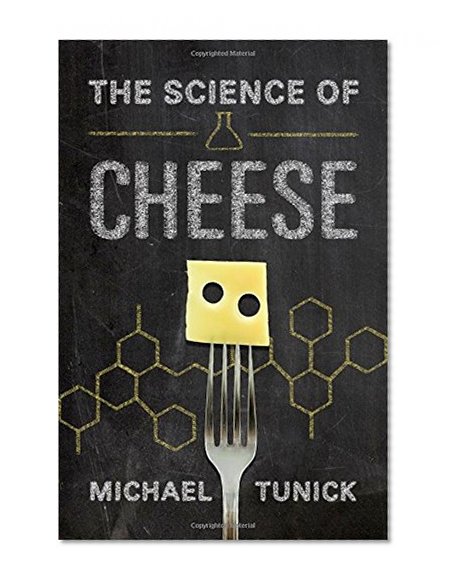
The Science of Cheese
📄 Viewing lite version
Full site ›
Book Details
Author(s)Michael H. Tunick
PublisherOxford University Press
ISBN / ASIN0199922306
ISBN-139780199922307
AvailabilityUsually ships in 24 hours
Sales Rank322,581
CategoryScience
MarketplaceUnited States 🇺🇸
Description ▲
More Books in Science
Low and High Dielectric Constant Materials and Their A…
View
From Biology to Sociopolitics: Conceptual Continuity i…
View
Reviews of Plasma Chemistry: Volume 2
View
Application of Short-Term Bioassays in the Fractionati…
View
The Molecular Immunology of Complex Carbohydrates - 2 …
View
Structure, Function and Biogenesis of Energy Transfer …
View
The Interacting Boson Model (Cambridge Monographs on M…
View
Heavy Quark Physics (Cambridge Monographs on Particle …
View
An Introduction to Theoretical Chemistry
View