Though modern readers no longer believe in the four humors of Galenic naturalism—blood, choler, melancholy, and phlegm—early modern thought found in these bodily fluids key to explaining human emotions and behavior. In Humoring the Body, Gail Kern Paster proposes a new way to read the emotions of the early modern stage so that contemporary readers may recover some of the historical particularity in early modern expressions of emotional self-experience.
Using notions drawn from humoral medical theory to untangle passages from important moral treatises, medical texts, natural histories, and major plays of Shakespeare and his contemporaries, Paster identifies a historical phenomenology in the language of affect by reconciling the significance of the four humors as the language of embodied emotion. She urges modern readers to resist the influence of post-Cartesian abstraction and the disembodiment of human psychology lest they miss the body-mind connection that still existed for Shakespeare and his contemporaries and constrained them to think differently about how their emotions were embodied in a premodern world. (20040107)
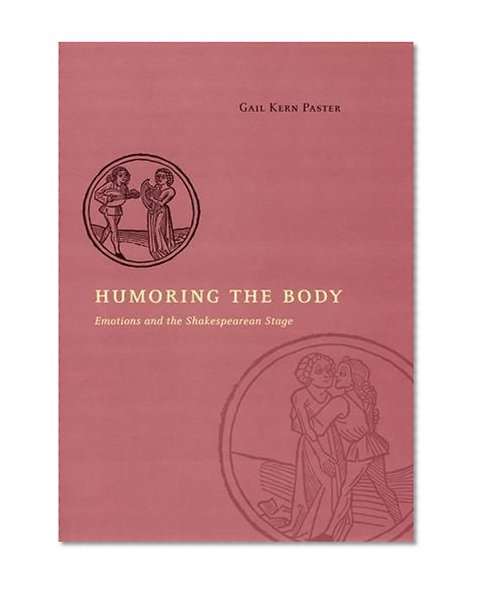
Humoring the Body: Emotions and the Shakespearean Stage
📄 Viewing lite version
Full site ›
Book Details
Author(s)Gail Kern Paster
PublisherUniversity Of Chicago Press
ISBN / ASIN0226648478
ISBN-139780226648477
AvailabilityUsually ships in 24 hours
CategoryLiterary Criticism
MarketplaceUnited States 🇺🇸
Description ▲
More Books in Literary Criticism
Egyptian Literature
View
Utopia Paraiso E Historia: Inscripciones Del Mito En G…
View
Nation, State, and Empire in English Renaissance Lite…
View
On the Outskirts of Form: Practicing Cultural Poetics
View
Genre at the Crossroads: The Challenge of Fantasy
View
Profiles in Canadian Drama: James Reaney
View
Monty Python, Shakespeare and English Renaissance Drama
View
Modes of Faith: Secular Surrogates for Lost Religious …
View
Latino Los Angeles in Film and Fiction: The Cultural P…
View