Bathed in light: composition, pose and lighting all move in the same direction--up towards the sun.
A hidden landscape: inside a conch shell, but with none of the clues to suggest what it might be.A moment: the culmination of seven minutes and almost forty frames.
Another Moment . . .: but an uncertain one.
Amazon Exclusive: A Letter from Michael Freeman on The Photographer's Mind
Dear Amazon Readers,
Well, I ve written and photographed many books, and I was a little shocked when last month the 150th one appeared. A third of these are about photography, and you might think that s rather too many for one person to write. I mean, don t I have anything better to do? Valid question, but I like books--no, more than that, I have a strong belief in them--and as my work involves a lot of travelling, I have a great deal of time to think and write when I m on the road. In fact, I ve always spent a little more than half of each year travelling, and usually on long trips. Five or six weeks at a time is my ideal, though it s sometimes longer by necessity. This isn t packaged tourism, of course, and many of the places I m in are a little quieter and more remote than you might expect. Perfect for thinking about writing, and this writing is also about what I m doing--shooting.
Two and a half years ago I published The Photographer s Eye, a book which at its core is about composition. This evolved from a much earlier book, long out of print. It always seemed to me that the word "technique" was usually being applied to the wrong things in photography. Technique was taken to mean twiddling knobs and working the controls, not to mention the arcana of imaging software. All very well, but what about the result? You could train yourself to fit a flash unit to the camera faster than a weapons expert could change magazines on a Kalashnikov, or learn to despise anyone who doesn t use Smart Objects in Photoshop, but if the image is boring at the end of it, what was the point?
The techniques that always engaged me (and to be frank, most of the other professionals I know) have to do with image making, regardless of camera model or Photoshop version. My background is editorial assignment photography, usually features, so the pressure is always on to make the shot interesting. It s quite often about storytelling, and if I m trying to tell a part of that story clearly, I might (for instance) need to find a viewpoint and framing that relates one thing in the frame to another. Or, can I find a composition and scale that somehow encapsulates the mood and essence of the scene? Or, did another photographer I know already shoot this in a particular way, and how can I be different and better?
Composition isn t about the Rule of Thirds (spare me, please!) and getting the framing perfect. There is no perfect. But neither is it vague and happy-feely. There are real techniques that involve knowing what the frame shape is doing to you, how the eye and mind tend to respond to visual stimuli, and how to create the right balance between surprise and comfort simply by the proportion you allocate to elements In the frame. And because these techniques involve choice of subject and being certain of what you re trying to achieve (for instance, make the scene lush and lovable, or shock the pants off the audience), composition reaches much, much further than placing points and lines in a rectangle.
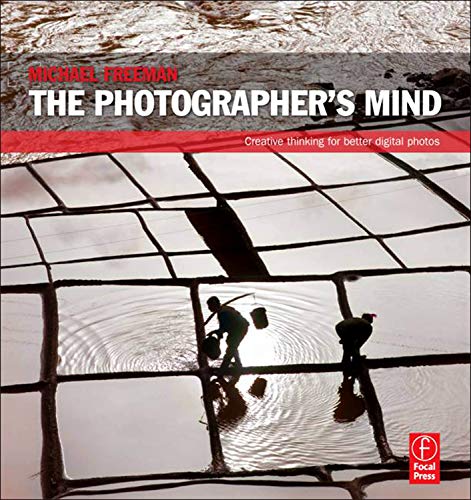
Well, if I go on much more, this will begin to be a book! And there already is one . . . it s the sequel to The Photographer s Eye, and it s called The Photographer s Mind. It exists because there was much more that I wanted to say than I was able to in Eye.
There s even a little bit more that I couldn t fit into this, either. One thing I touch on in the book is the deep effect of frame shape, and in particular a new trend towards wider. 16:9 is rapidly gaining ground as a "natural" format (aspect ratio, actually) because of HDTV, and a few cameras offer this framing. And of course, its shape alone has an effect on composing that is noticeably different from 3:2 and 4:3. Here are four examples, each illustrating a different effect:
Pushes the attention outwards to left and right--gives a panoramic feeling.Squeezes top and bottom--less foreground, less sky.Encourages the "two-shot"--one object left vs. one object right.Strengthens any left-right movement that the scene may already have.What Kind of Photographer Are You?
A Photo Personality Quiz
Do you know how to read a histogram?
- More or less
- Fairly well, and I m getting better all the time
- Of course! What a nerve to ask!
- Trent Parke
- Irving Penn
- Ansel Adams
- Myself
- A year s invitations to opening nights at the photo gallery of your choice
- A coffee-table book on grand American landscapes
- The latest Ukrainian software to do something amazing to your image
- People
- Landscape
- Fire hydrant
- Detail of a wall
- Gas station
- 0-10
- 10-50
- 50 plus
- An 85mm 1.4
- A 105mm Macro
- A lens that bends, swings or tilts
- Interesting contrast between elements
- Rule of Thirds
- Getting it all inside the frame
- It s more important to get it sharp, because you can fix the composition later
- Anything unusual
- Backlighting
- Sunset and sunrise
- Frontal and crisp
- Flash
- The camera is irrelevant
- He understood exactly how the camera works
- This camera is a miracle of modern engineering
How did you score? Add up the numbers for each answer you checked . . .
10-16
Either you have a passion for shooting, or you cheated because you guessed that a low score would be best. Even if the latter, at least you wanted to look like a photographer rather than a techno-geek, so you won t be disappointed to find that this new book is completely about thinking and shooting pictures, with not a piece of a camera kit or a computer screen anywhere in sight!
17-24
What a balanced, reasonable and moderate individual you are! The alternative would be that you couldn t really make up your mind, but that can t be true, can it? Anyway, I really envy you for steering clear of extremes. Guess what . . . you ll find an equally balanced view of the range of photographic expression and style in this book!
25-33
You just might need a little more excitement in your photographic life. Moreover, you ll go pasty-faced from sitting in front of the computer screen. Recommendation: close it down, spend an hour reading this book, then go out with the camera and take at least two photographs of a kind you ve never tried before.
Funny how this book seems to be good for everyone, isn t it? Admittedly, you ll still need the camera manual. But please don t write to me saying how unfair and opinionated the test was, because that s what these quizzes are all about!